19 Jun 2026
Aerodynamic Profiling from Motorsports Boosts Efficiency in Cycling Apparel and Swimwear
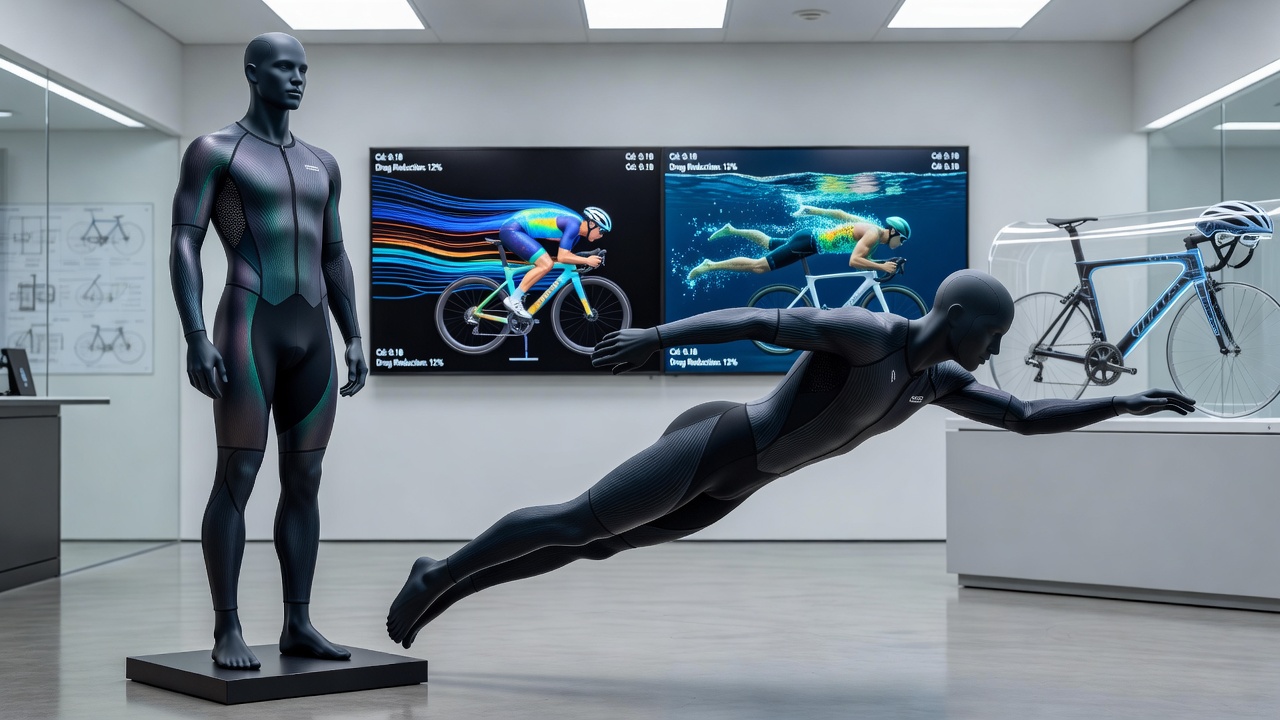
Engineers have transferred computational fluid dynamics models and surface texturing methods from Formula 1 and endurance racing directly into the design of cycling skinsuits and competitive swimwear, and these transfers produce measurable reductions in drag coefficients. Wind tunnel data collected across multiple facilities demonstrates that seamless construction patterns originally developed for race car bodywork now appear in cycling apparel panels that channel air along the rider's torso and limbs. Researchers at the Australian Institute of Sport have documented how low-profile seams and zoned fabric compression lower total aerodynamic drag by up to 4 percent during sustained efforts at 50 kilometers per hour.
Core Techniques Transferred from Motorsports
Motorsport teams refined vortex generators and dimpled surfaces to manage boundary layer separation on high-speed vehicles, and apparel developers adapted those same principles by integrating micro-ridges and laser-cut perforations into textiles. These modifications trip airflow at precise points along the body, which delays separation and shrinks the wake behind the athlete. Computational simulations originally run on supercomputers for Le Mans prototypes now guide iterative fabric testing for both road cyclists and pool sprinters, while physical prototypes undergo validation in full-scale wind tunnels calibrated to replicate race velocities.
Seam placement strategies borrowed from chassis fairings minimize turbulence at shoulder and hip junctions in cycling suits, and similar mapping appears in swimwear shoulder straps that follow torso contours to reduce form drag during underwater dolphin kicks. Data from European wind tunnel facilities shows that repositioning a single seam on a skinsuit can alter drag measurements by several watts at competition speeds, prompting manufacturers to adopt three-dimensional knitting machines that eliminate traditional stitch lines entirely.
Application in Cycling Apparel
Professional peloton teams apply motorsport-derived helmet shapes featuring truncated tail sections that reduce pressure drag when riders maintain time-trial positions, and these helmets integrate with skinsuit collars designed to create a continuous aerodynamic surface from head to shoulders. Fabric manufacturers incorporate ribbed zones along the forearms and thighs that mirror the strakes used on open-wheel cars to direct airflow inward and limit lateral spillage. Field tests conducted during 2025 Grand Tour stages recorded average power savings of 8 to 12 watts for riders wearing updated suits compared with previous generations, and these gains compound over multi-hour stages.
Layering systems now include thin, bonded membranes that sit beneath outer fabrics to smooth micro-variations in muscle contours, a technique refined through repeated CFD iterations first performed for prototype race cars. Observers note that teams increasingly request custom suit mapping based on individual rider anthropometrics collected via 3D scanning, which parallels the bespoke aerodynamic packages developed for each driver in endurance racing series.
Transfer to Competitive Swimwear
Swimwear developers apply the same boundary layer management concepts by embedding micro-dimples and directional ribbing across torso and leg panels, and these features reduce skin friction drag while the swimmer maintains streamline position. Research groups in Canada and Germany have measured reductions in passive drag of 2 to 3 percent when comparing textured suits against smooth controls in flume testing at velocities between 1.8 and 2.2 meters per second. The patterning follows guidelines first established for high-downforce race car underbodies, where controlled turbulence prevents flow separation over curved surfaces.
Manufacturers calibrate the spacing and depth of these surface features through iterative tunnel runs that replicate the Reynolds numbers swimmers encounter during starts and turns, and the resulting suits maintain consistent performance across repeated race distances. Governing bodies such as World Aquatics continue to monitor surface texture regulations to ensure modifications remain within defined parameters while still allowing the performance benefits documented in laboratory settings.
Testing Protocols and Data Integration
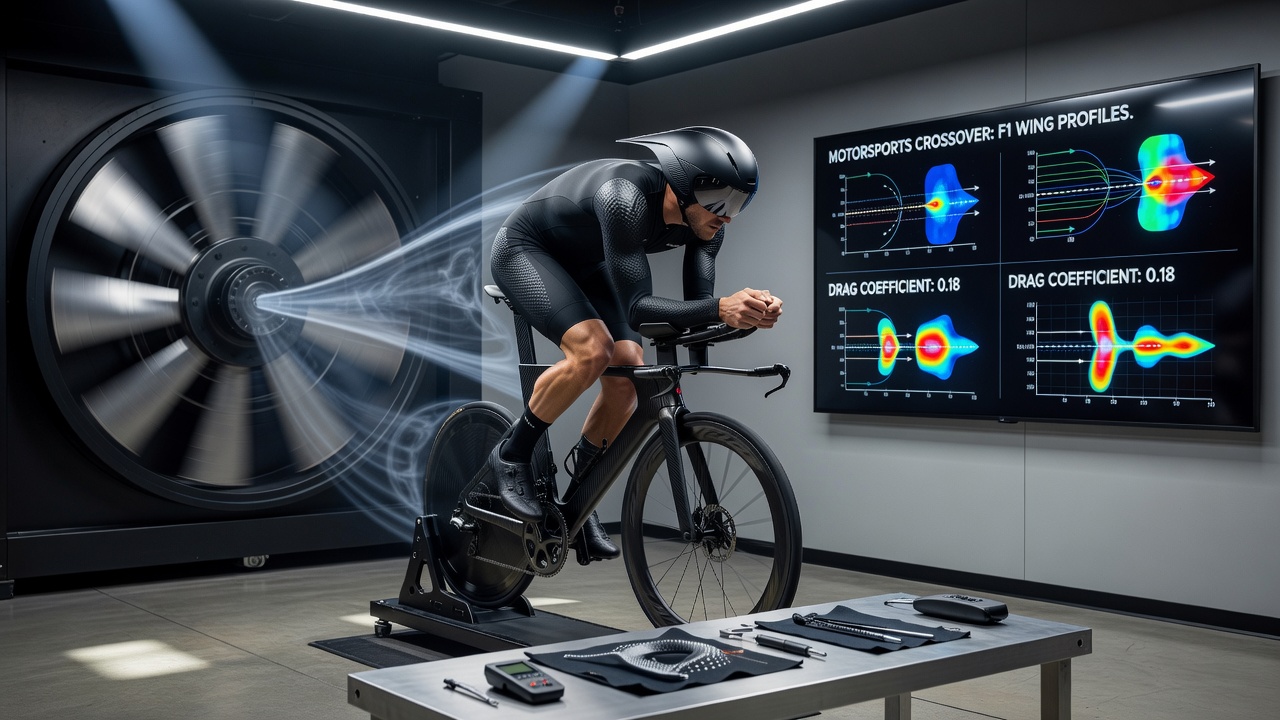
Wind tunnel sessions now combine athlete mannequins with articulated limbs that cycle through pedaling or kicking motions, and these dynamic tests replace static measurements that previously underestimated real-world drag. Software platforms originally built for motorsport telemetry integrate pressure sensor arrays placed across apparel surfaces, generating heat maps that highlight high-drag zones requiring redesign. Teams schedule validation testing ahead of major competitions, with several squads preparing updated kits ahead of the June 2026 motorsport and multisport crossover events that feature joint technology showcases.
Portable pressure mapping systems adapted from race car development allow on-site adjustments during training camps, and coaches receive immediate feedback on how small positioning changes interact with apparel aerodynamics. This closed-loop approach mirrors the rapid prototyping cycles common in Formula 1, where data drives design changes measured in hours rather than weeks.
Conclusion
Continued refinement of motorsport-derived profiling methods continues to shape measurable performance outcomes in both cycling apparel and swimwear through systematic application of fluid dynamics principles, surface engineering, and integrated testing regimes. Organizations across multiple regions maintain active research programs that track incremental gains while regulatory frameworks evolve alongside technological capabilities.