22 May 2026
Biomechanical Data Integration Reshaping Support Structures Across Running Shoes, Soccer Cleats, and Yoga Mats
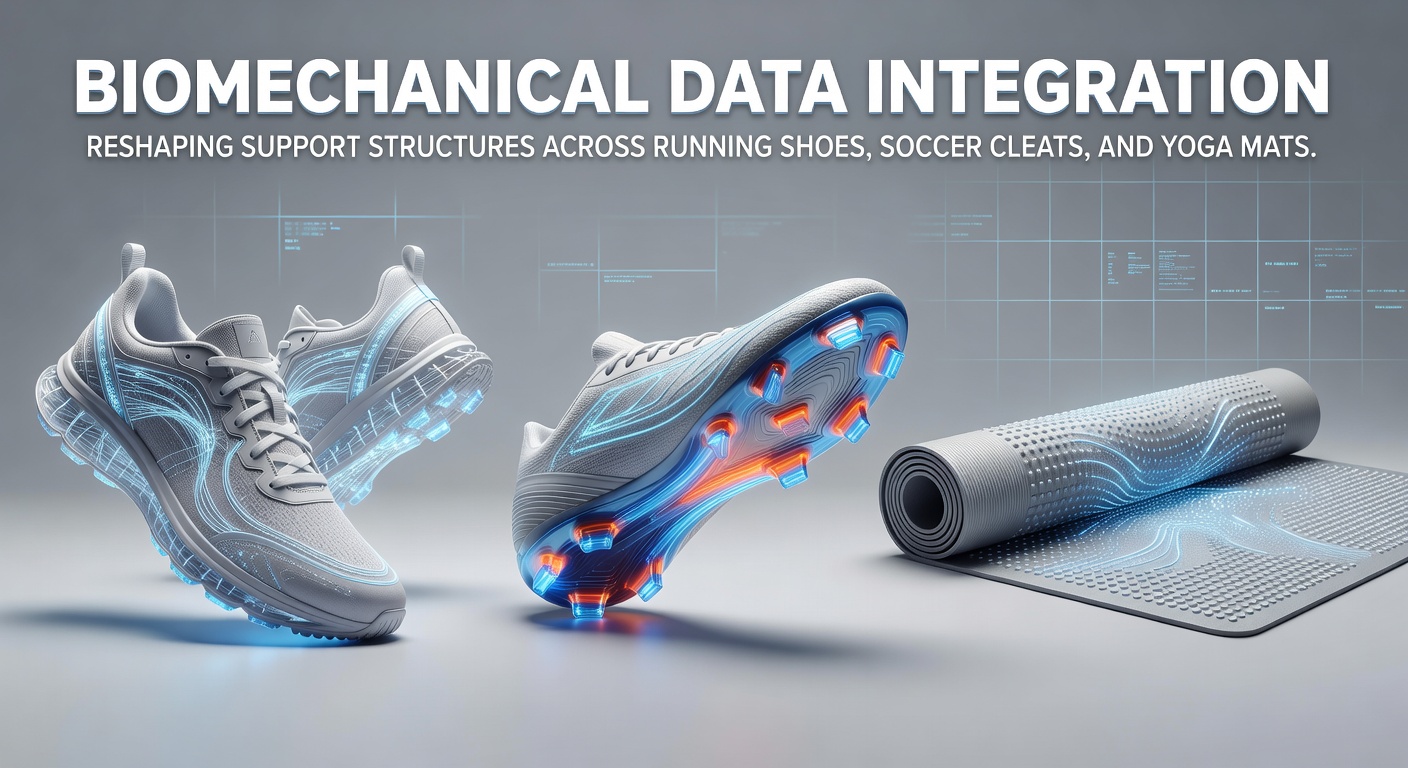 Data from motion capture systems and pressure sensors now feeds directly into the design of support elements in running shoes, soccer cleats, and yoga mats, creating structures that respond to individual movement patterns rather than relying on static molds. Researchers collect gait cycles, joint angles, and force distribution metrics through wearable devices, then translate those measurements into layered foams, adjustable midsoles, and textured surfaces that align with actual load paths during activity. Running shoe manufacturers integrate this information to refine arch platforms and heel counters. Studies from the University of Calgary show that real-time kinematic data allows engineers to vary the density of cushioning zones so that pronation control matches the wearer's recorded foot strike angles. In May 2026, a multi-lab project released updated algorithms that reduced peak impact forces by an average of 12 percent across test groups when support geometry was derived from three-dimensional foot scans combined with treadmill pressure readings. Soccer cleat developers apply similar datasets to stud placement and ankle collars. High-speed video analysis reveals lateral shear forces during cutting maneuvers, prompting brands to reposition cleat clusters and add asymmetric reinforcements that stabilize the midfoot without restricting rotation. Field trials conducted by the European College of Sport Science documented fewer ankle inversion incidents when cleat plates incorporated torque values measured from elite players' change-of-direction sequences. Yoga mat producers use pressure mapping to sculpt surface contours that support spinal alignment during poses. Data from force platforms indicate where practitioners exert concentrated loads at the heels, knees, and hands, leading to the incorporation of firmer nodules in those zones while softer sections cradle the sacrum. Manufacturers now embed subtle ridges calibrated to average hip rotation ranges captured during sun salutation sequences. Observers note that integration pipelines typically begin with athlete-worn inertial measurement units that stream data to cloud-based modeling software. Designers then iterate prototypes through finite element analysis that simulates thousands of gait cycles before physical production begins. This workflow shortens development timelines because adjustments occur digitally rather than through repeated physical trials. One case involved a professional soccer club that supplied match-day telemetry to its equipment partner. The resulting cleat updates featured a reinforced lateral sidewall whose thickness varied according to recorded eversion moments, producing measurable improvements in stability metrics during subsequent training sessions. Similar approaches in running footwear have yielded midsoles with variable wall heights that accommodate recorded supination tendencies identified through outdoor route tracking. Additional refinements appear in the bonding layers between upper materials and support platforms. Adhesives and stitching patterns now follow stress lines derived from strain gauge readings, reducing delamination risks under repeated flexion. Yoga mat constructions incorporate closed-cell foam densities adjusted to body-mass distribution data, ensuring consistent rebound characteristics regardless of user weight categories. Industry reports from the International Society of Biomechanics in Sports highlight how these data-driven methods extend equipment longevity because support elements experience loads closer to their intended design parameters. Reduced material fatigue follows when overbuilt sections are thinned according to actual usage profiles rather than worst-case assumptions. Data pipelines continue to evolve with the addition of machine-learning models that predict long-term tissue stress from short-term sensor recordings. Engineers apply these predictions to fine-tune support rigidity gradients in running shoes and cleats alike, while mat textures receive micro-pattern updates that improve friction coefficients at documented slip points. The approach also influences customization programs where consumers submit gait analysis videos or in-store pressure scans. Production lines then generate individualized support inserts or mat overlays without requiring separate tooling changes for each variation. Retailers report higher retention rates among users whose equipment matches their specific biomechanical signatures recorded during initial assessments.
Implementation Challenges and Technical Solutions
Collecting consistent biomechanical datasets across diverse populations presents logistical hurdles that research teams address through standardized protocols. Portable sensor arrays now capture outdoor running data with accuracy levels approaching laboratory conditions, allowing broader sample sizes that improve the statistical reliability of support structure recommendations. Processing large volumes of kinematic information requires efficient filtering algorithms that isolate relevant force vectors while discarding noise from environmental factors. Software platforms developed in collaboration with academic institutions handle these tasks, converting raw accelerometer outputs into actionable design parameters for midsole geometry and stud configurations.Future Directions in Equipment Manufacturing
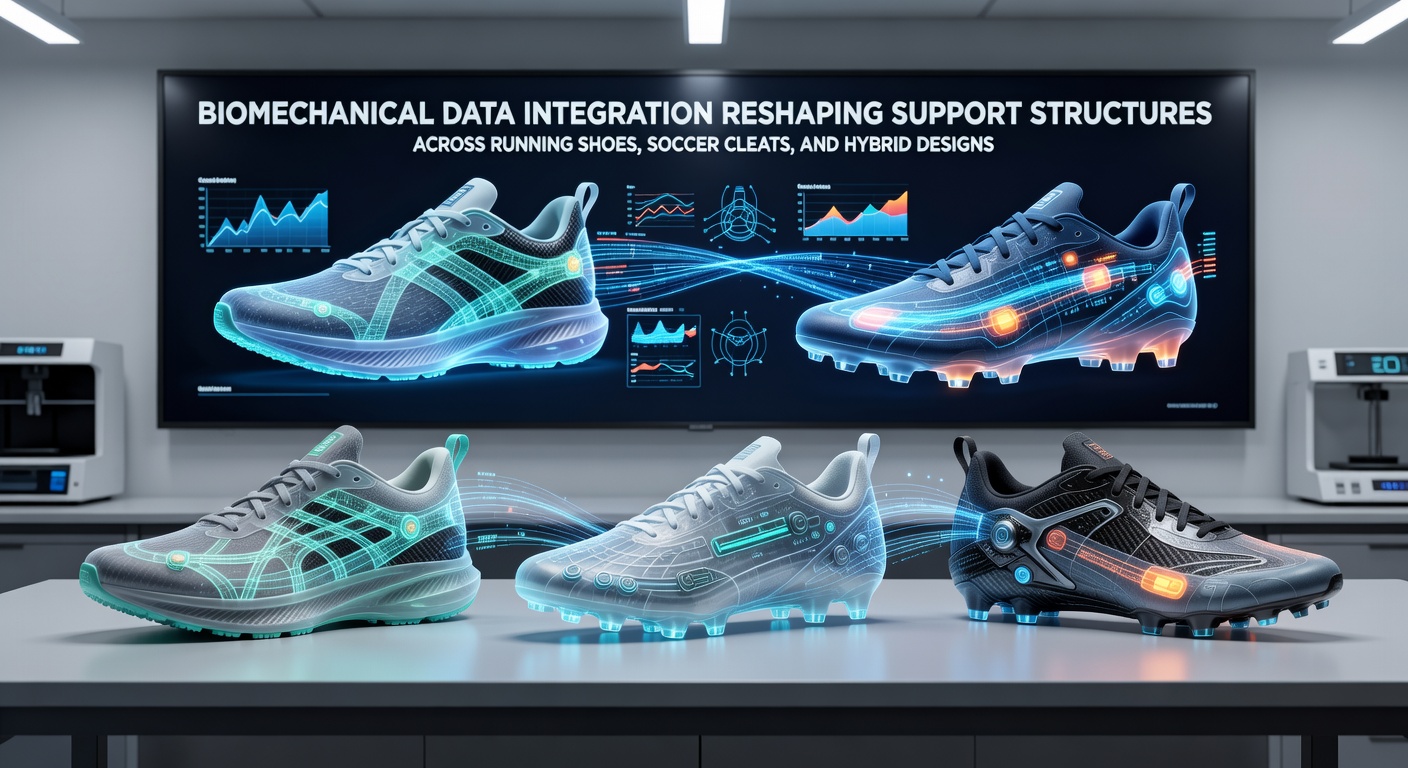 Ongoing work focuses on closed-loop systems where equipment itself collects usage data and relays adjustments back to manufacturers for iterative refinements. Early prototypes of sensor-embedded running shoes already transmit stride variability metrics that inform subsequent model updates, closing the feedback loop between athlete performance and product evolution.