19 Jul 2026
Craft Traditions Merging with Industrial Processes in Today's Athletic Equipment Landscape
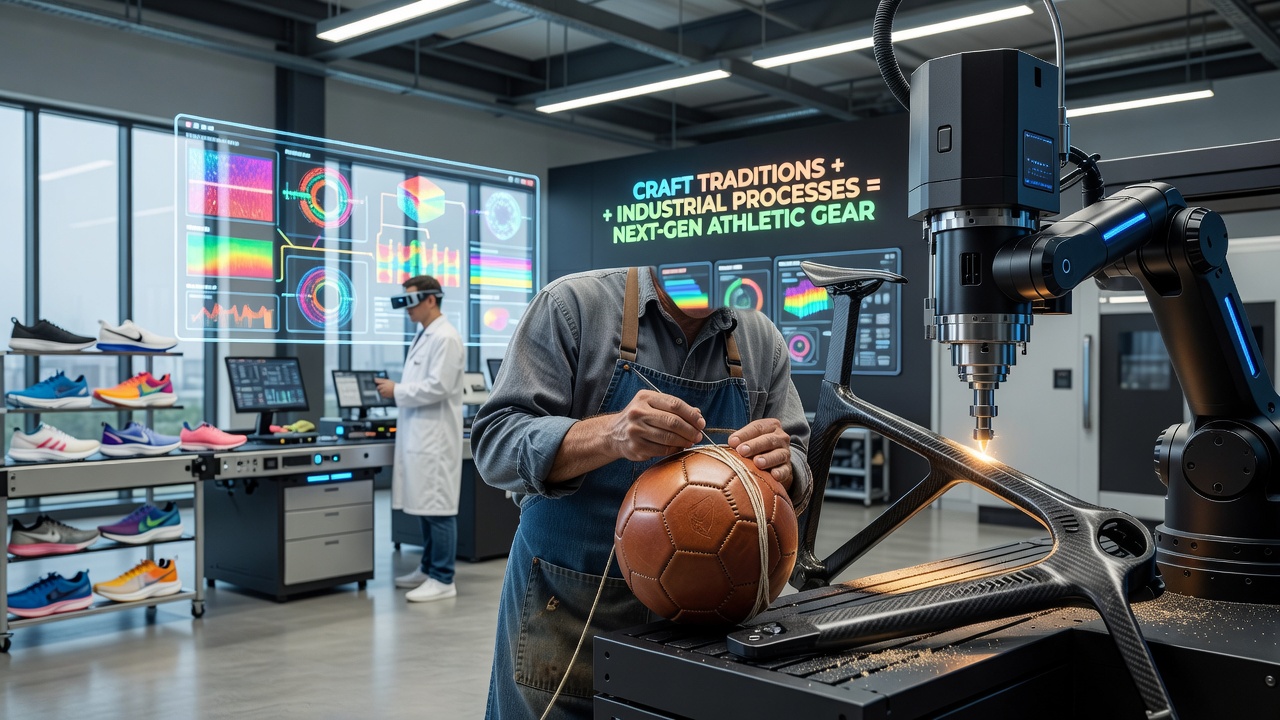 Traditional methods of equipment creation once relied entirely on individual artisans shaping materials by hand, yet today's athletic gear production blends those time-honored skills with automated systems that scale output without erasing the human touch. Manufacturers across multiple sports now integrate hand-finishing techniques into assembly lines where machines handle repetitive tasks such as cutting composites or molding frames, which allows consistent quality alongside customized details that only skilled workers can provide. This fusion appears clearly in soccer ball construction, where workers still stitch panels manually in certain facilities even as computer-guided cutters prepare the leather or synthetic materials in advance. The process begins with industrial precision tools that ensure each panel meets exact dimensional standards, then shifts to craftspeople who align and sew the pieces using techniques passed down through generations, creating seams that withstand the stresses of professional play while maintaining the ball's roundness over extended use.
Integration in Racquet Sports and Protective Gear
Tennis racket production demonstrates another layer of this convergence, as traditional wood bending methods combine with high-pressure injection molding for graphite frames, and observers note that final stringing often remains a manual operation because automated systems struggle to replicate the tension adjustments an experienced technician makes based on each frame's subtle variations. Researchers at the University of Melbourne documented how these hybrid approaches extend racket durability by up to 30 percent compared to fully automated alternatives, according to findings released in early 2025.
Boxing gloves follow a similar path, where industrial foaming machines create the internal padding layers yet leather artisans still cut, shape, and lace the outer shells by hand to achieve the precise fit and flexibility required for repeated impact absorption. This combination reduces production time by roughly 40 percent while preserving the tactile qualities that athletes associate with well-crafted protective equipment.Current Developments Across Apparel and Footwear
Running shoe brands have adopted comparable strategies since the mid-2020s, employing robotic knitting machines to form upper materials before craftspeople add reinforced stitching at stress points that machines cannot easily access. The result appears in models where the industrial base provides lightweight cushioning structures and the manual additions deliver targeted support zones tailored to specific foot shapes reported in biomechanical studies.
Cycling apparel manufacturers likewise merge screen-printing automation with hand-applied seam sealing on jackets and shorts, ensuring waterproof integrity without sacrificing breathability that only careful human inspection can verify. Data from the Australian Institute of Sport indicates that equipment produced through these blended methods shows fewer field failures during multi-day events compared to purely machine-made counterparts.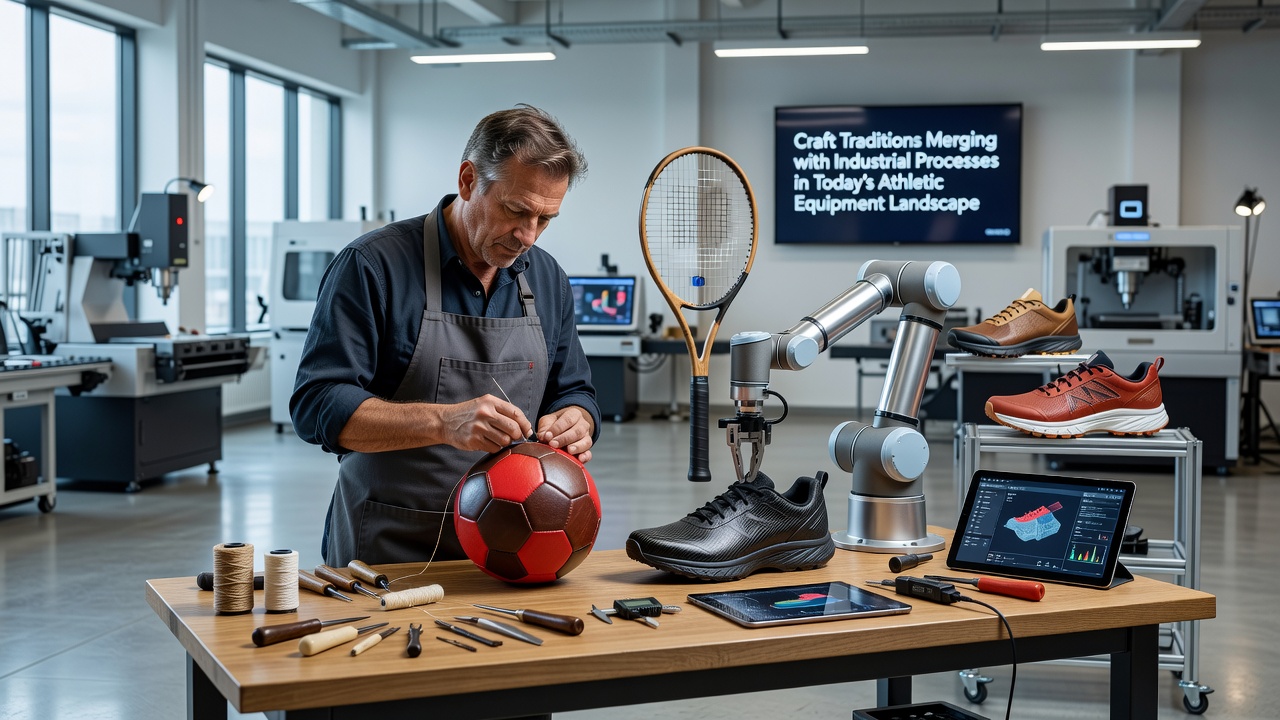
Impact on Production Timelines and Quality Metrics
Facilities that adopted this merged approach report shorter lead times from design to delivery because automation handles the bulk material preparation while skilled labor focuses on final assembly stages that benefit most from human judgment. A 2026 industry analysis conducted by the Canadian Sports Equipment Federation found that hybrid lines increased overall throughput by 25 percent without measurable declines in product consistency, measured through standardized drop tests and wear simulations.
Golf club shafts present a further case where traditional shaft tapering methods, once performed entirely by hand, now incorporate CNC lathes for initial shaping followed by manual polishing that restores the surface characteristics players expect. Those who've tracked these changes note that the combination preserves the feel associated with older craftsmanship while meeting modern tolerances for weight distribution and flex patterns.Future Outlook Through Mid-2026
By July 2026, several European production sites plan expanded training programs that pair apprentices with both robotic operators and master craftspeople, aiming to sustain the knowledge transfer required for continued integration. These initiatives build on existing models where industrial sensors monitor machine output and human inspectors make real-time adjustments to maintain alignment between automated and manual phases.
The pattern extends across additional categories such as basketballs and swim caps, where molded cores receive hand-applied surface textures or seals that enhance grip and longevity under competitive conditions. Evidence from multiple facilities suggests this balanced method supports both high-volume supply chains and the specialized demands of elite athletes who prioritize equipment with heritage-level attention to detail.Conclusion
Equipment landscapes continue evolving as craft traditions find defined roles within industrial frameworks, creating products that leverage the strengths of each approach without forcing a complete replacement of one by the other. Facilities that maintain this equilibrium demonstrate measurable gains in efficiency alongside preserved performance characteristics that trace directly to artisanal practices refined over decades.