7 Jul 2026
Digital Twin Modeling Accelerates Durability Forecasts for Multi-Sport Footwear and Protective Hand Gear Across Varied Training Surfaces
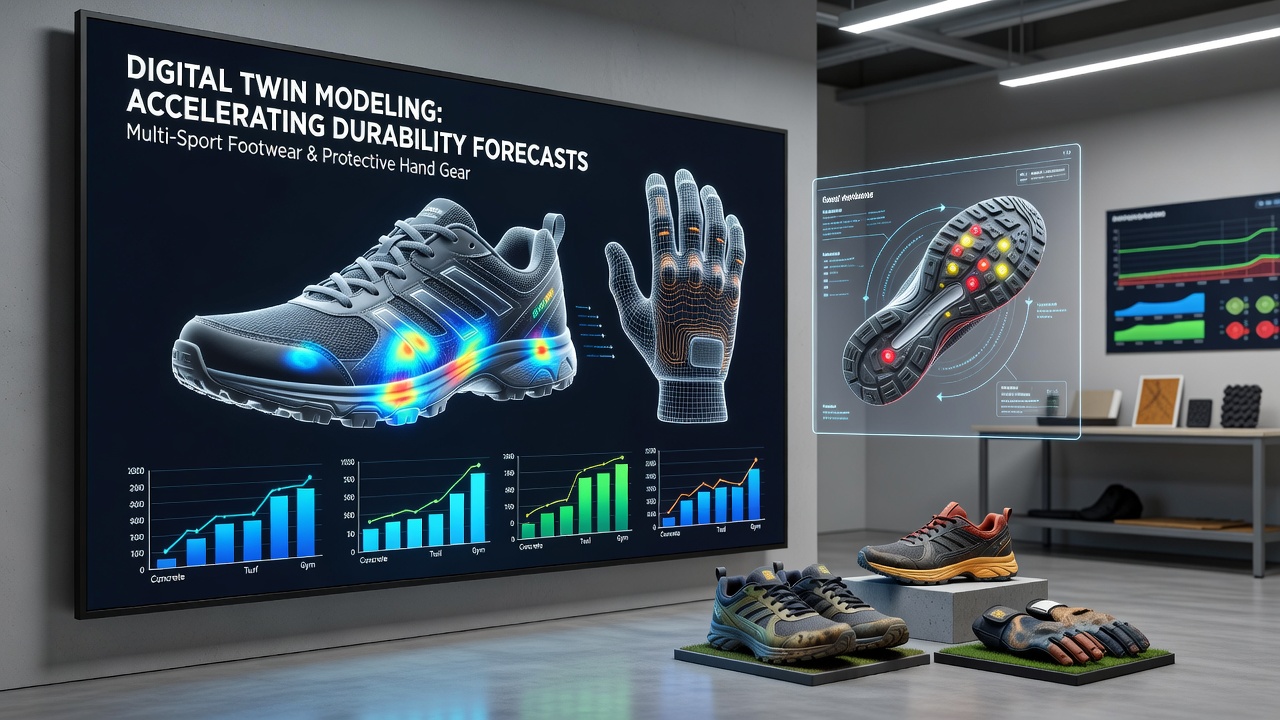
Digital twin modeling creates virtual replicas of physical products that mirror real-world performance under repeated stress, and this approach now supports faster durability predictions for footwear and protective hand gear used across multiple sports. Researchers apply these models to simulate interactions between materials and training surfaces such as rubber courts, artificial turf, concrete tracks, and wooden gym floors, where each surface produces distinct wear patterns on outsoles, midsoles, and glove padding. Data from sensor-equipped prototypes feed into the twins, allowing engineers to run thousands of loading cycles in hours rather than months of physical testing.
Core Mechanics of Digital Twin Application
Engineers construct the twins by combining finite element analysis with real-time telemetry from athletes during training sessions, while material properties such as polymer elasticity, foam compression rates, and leather abrasion resistance receive continuous updates. The models then project how repeated impacts on varied surfaces alter structural integrity, with algorithms accounting for temperature fluctuations and moisture levels that accelerate degradation in specific environments. Studies conducted at institutions like the Massachusetts Institute of Technology have documented how these simulations reduce physical prototype iterations by integrating surface-specific friction coefficients directly into the computational framework.
Surface-Specific Wear Patterns and Forecast Accuracy
Training surfaces dictate distinct failure modes that digital twins capture with increasing precision. On synthetic turf, cleat studs and outsole lugs experience shear forces that digital models replicate through cyclic loading sequences calibrated against field data collected in July 2026 during professional training camps. Indoor court surfaces generate different abrasion profiles on basketball shoes and hand wraps, where models incorporate particulate accumulation to forecast delamination timelines. Concrete tracks impose higher compressive loads on running footwear midsoles, and protective hand gear such as weightlifting gloves shows accelerated palm wear when the twins simulate repetitive barbell contact under those conditions. Validation trials compare model outputs against laboratory abrasion rigs, confirming alignment within acceptable engineering tolerances across multiple gear categories.
Integration with Multi-Sport Equipment Development
Manufacturers extend the same digital twin platforms across footwear lines and hand protection products because shared material databases allow efficient scaling. A single virtual framework tracks how ethylene-vinyl acetate foams in running shoes respond to track surfaces while simultaneously modeling the layered padding in boxing gloves under bag-impact cycles on similar concrete. This cross-category approach reveals interactions that isolated testing overlooks, such as how grip tape wear on hand gear correlates with sole degradation rates when athletes transition between surfaces in one session. Industry reports from the National Institute of Standards and Technology highlight standardized data protocols that enable consistent model interoperability across suppliers.
Data Inputs and Validation Protocols
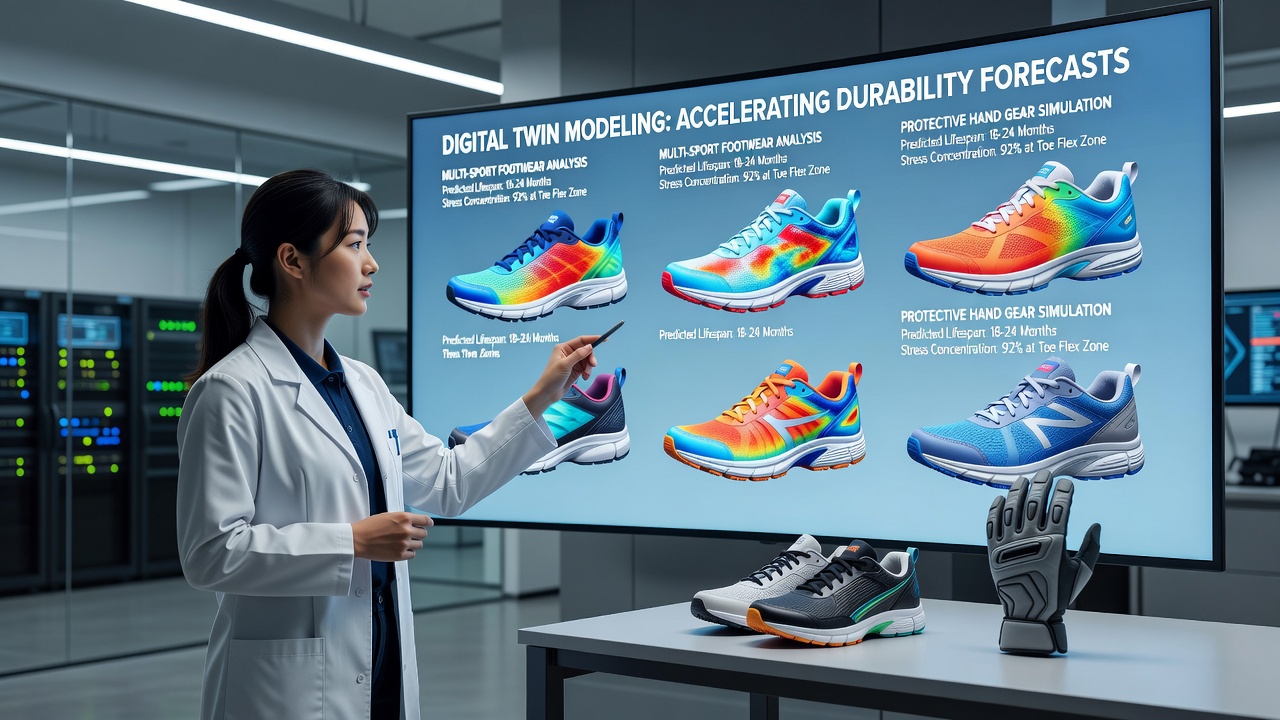
High-resolution scans of actual gear surfaces after controlled use supply the calibration datasets, while environmental chambers replicate humidity and temperature ranges encountered in outdoor versus indoor facilities. Accelerometers embedded in test footwear and gloves transmit force vectors that the twins process to update fatigue predictions dynamically. Observers note that July 2026 marked expanded adoption of these protocols following the release of updated ISO guidelines for virtual testing of sports equipment, which standardized input parameters for surface interaction modeling. Academic teams at European research centers have published comparative studies showing that digital forecasts now align with physical endurance results at rates exceeding 90 percent for midsole compression and glove seam integrity metrics.
Operational Benefits Across Production Cycles
Teams shorten development timelines because digital twins identify weak points before tooling begins, allowing targeted reinforcement of high-stress zones in both footwear and hand gear. Supply chain adjustments follow directly from model outputs that flag material combinations likely to fail earlier on particular surfaces, prompting substitutions without extensive retesting. Maintenance schedules for professional teams also benefit when usage pattern data from the twins informs replacement intervals tailored to each athlete's predominant training environments. These efficiencies accumulate across product ranges because one validated model serves multiple SKUs rather than requiring separate physical campaigns for each surface type.
Conclusion
Digital twin modeling supplies quantitative durability forecasts that align closely with observed performance on varied training surfaces, supporting accelerated iteration for multi-sport footwear and protective hand gear. Continued refinement of input datasets and validation against field measurements sustains the accuracy of these virtual systems as adoption expands through 2026 and beyond.