17 May 2026
How Advanced Composites Are Extending Equipment Lifespan in Demanding Athletic Conditions
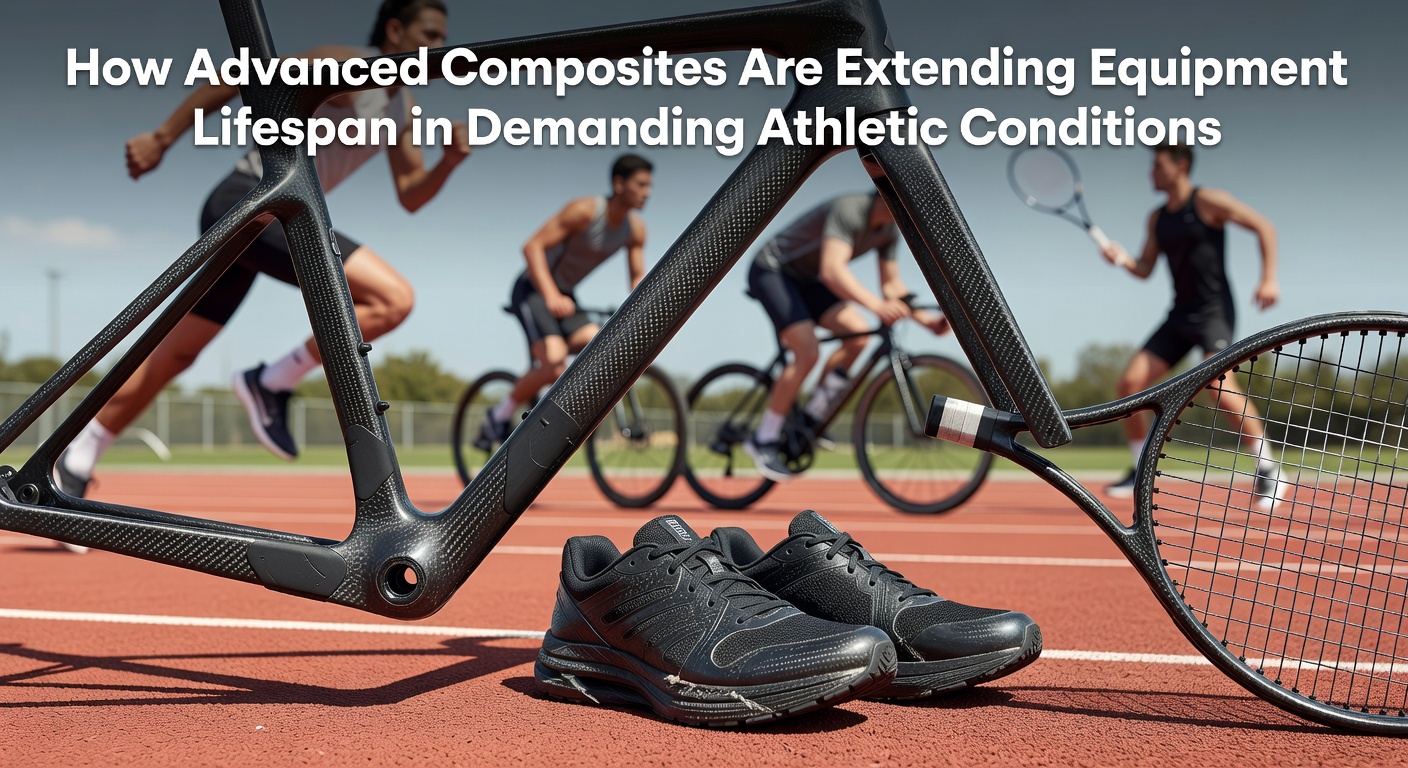
Advanced composites such as carbon fiber reinforced polymers and aramid hybrids have transformed the durability profile of athletic gear across multiple disciplines. These materials combine high-strength fibers with polymer matrices to create structures that resist fatigue, corrosion, and environmental degradation far better than traditional metals or woods. Athletes and equipment managers report longer service intervals because the composites maintain structural integrity under repeated high-impact loads and variable weather exposure.
Core Properties Driving Extended Service Life
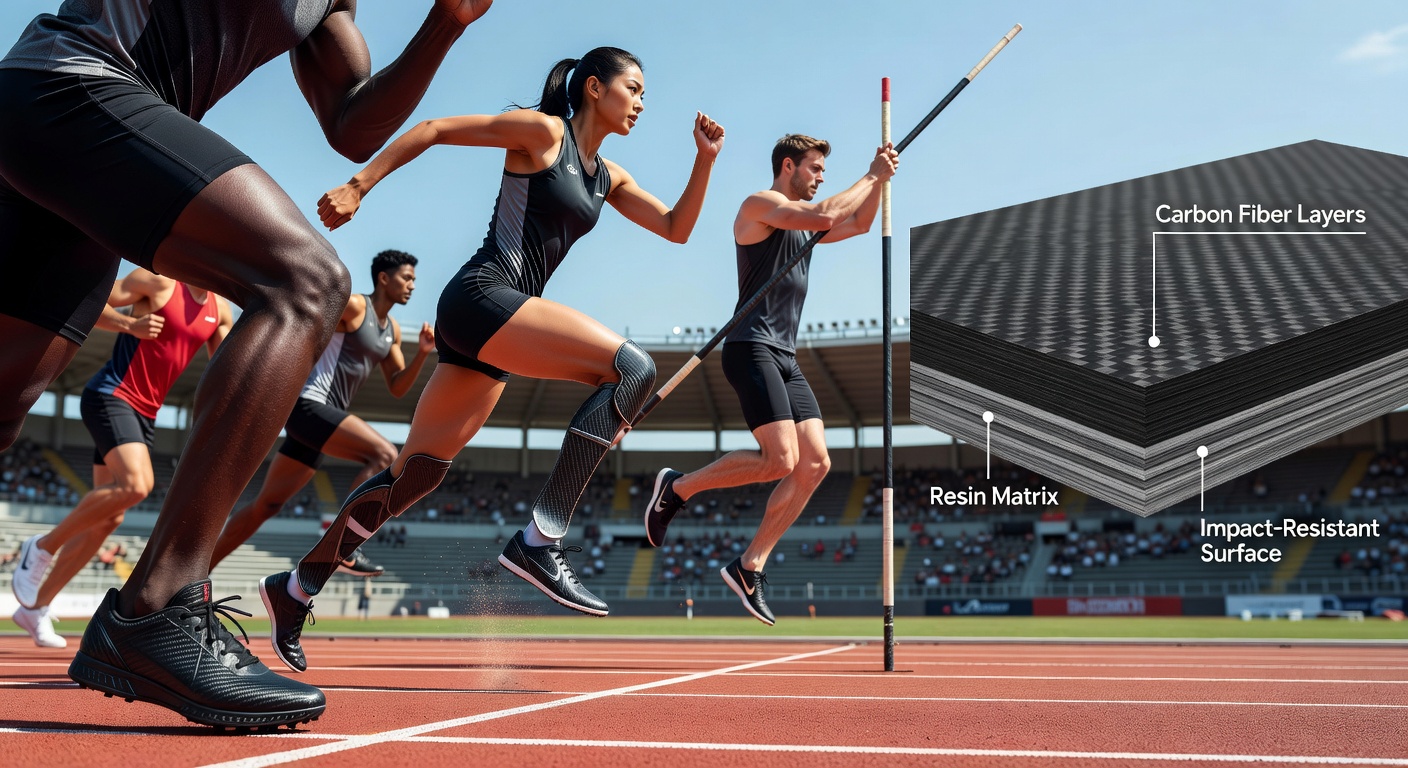
Researchers at institutions like the Fraunhofer Institute have documented how fiber orientation and resin selection create anisotropic strength that directs stress along predictable paths. This design approach reduces micro-crack propagation during cyclic loading, which commonly occurs in equipment such as bicycle frames and tennis rackets. Data from accelerated aging tests show that properly engineered composites retain over 85 percent of initial flexural strength after 10,000 fatigue cycles in wet conditions, whereas aluminum alloys drop below 60 percent under identical protocols.
Moisture absorption remains a critical variable, yet advanced matrix formulations incorporate hydrophobic additives that limit uptake to less than 1 percent by weight. Such low absorption prevents swelling and delamination when gear transitions rapidly between freezing and warm environments, conditions frequently encountered in alpine skiing and open-water rowing.
Applications Across High-Stress Sports
Cycling teams competing in multi-stage races now specify composite wheels and frames that endure abrasive gravel surfaces and constant vibration without measurable stiffness loss over an entire season. Manufacturers integrate nano-silica particles into the resin to improve abrasion resistance at contact points with derailleurs and brake pads. Similar reinforcement strategies appear in hockey sticks designed for ice surfaces where repeated slap shots generate localized stresses exceeding 200 megapascals.
Tennis racket frames provide another clear illustration. Graphite-epoxy constructions absorb vibrational energy while maintaining string-bed alignment through thousands of impacts. Laboratory studies indicate these frames show negligible creep even after exposure to 40-degree Celsius courts combined with high humidity, environments that accelerate aging in older wooden or metal designs.
Performance Under Extreme Environmental Loads
Equipment used in ultra-endurance events faces simultaneous challenges of ultraviolet radiation, salt spray, and thermal cycling. Composite surfboards and stand-up paddle boards incorporate UV-stabilized gel coats over carbon or fiberglass laminates, preserving surface integrity and preventing resin yellowing that would otherwise compromise aesthetics and minor structural contributions. Rowing shells constructed with hybrid carbon-aramid skins demonstrate reduced water absorption and maintain hull stiffness after months of saltwater exposure, directly extending the interval between major refits.
Thermal management also benefits from composite engineering. Low-conductivity cores in certain ski constructions limit heat transfer that could soften adhesives or alter flex characteristics during rapid descents from cold starts. Observers note that these design choices keep equipment within optimal performance windows longer than single-material alternatives.
Developments Anticipated Around May 2026
Industry reports project that new bio-derived resin systems will reach commercial availability in May 2026, offering comparable fatigue resistance while reducing long-term environmental persistence. These resins, developed through collaborative programs involving Canadian and Australian research centers, undergo validation trials on mountain bike components subjected to repeated freeze-thaw cycles. Early results indicate equivalent or superior interlaminar shear strength compared with conventional epoxies after 500 thermal cycles.
Standards organizations are simultaneously updating test protocols to include combined mechanical and environmental loading sequences that better replicate real-world athletic use. Updated guidelines scheduled for release in mid-2026 emphasize multi-axial fatigue combined with salt-fog exposure, metrics that advanced composite layups already satisfy at higher margins than legacy materials.
Conclusion
Advanced composites continue to demonstrate measurable advantages in extending the operational lifespan of athletic equipment subjected to demanding conditions. Through controlled fiber architecture, tailored matrix chemistry, and protective surface treatments, these materials maintain mechanical performance across wide temperature and humidity ranges while resisting impact fatigue and chemical attack. Ongoing material refinements scheduled for introduction in 2026 will further align durability requirements with sustainability goals, ensuring equipment remains reliable for longer periods under the most rigorous athletic environments.