23 Jun 2026
How Altitude Variations Reshape Material Durability in High-Elevation Equipment for Runners, Cyclists, and Swimmers
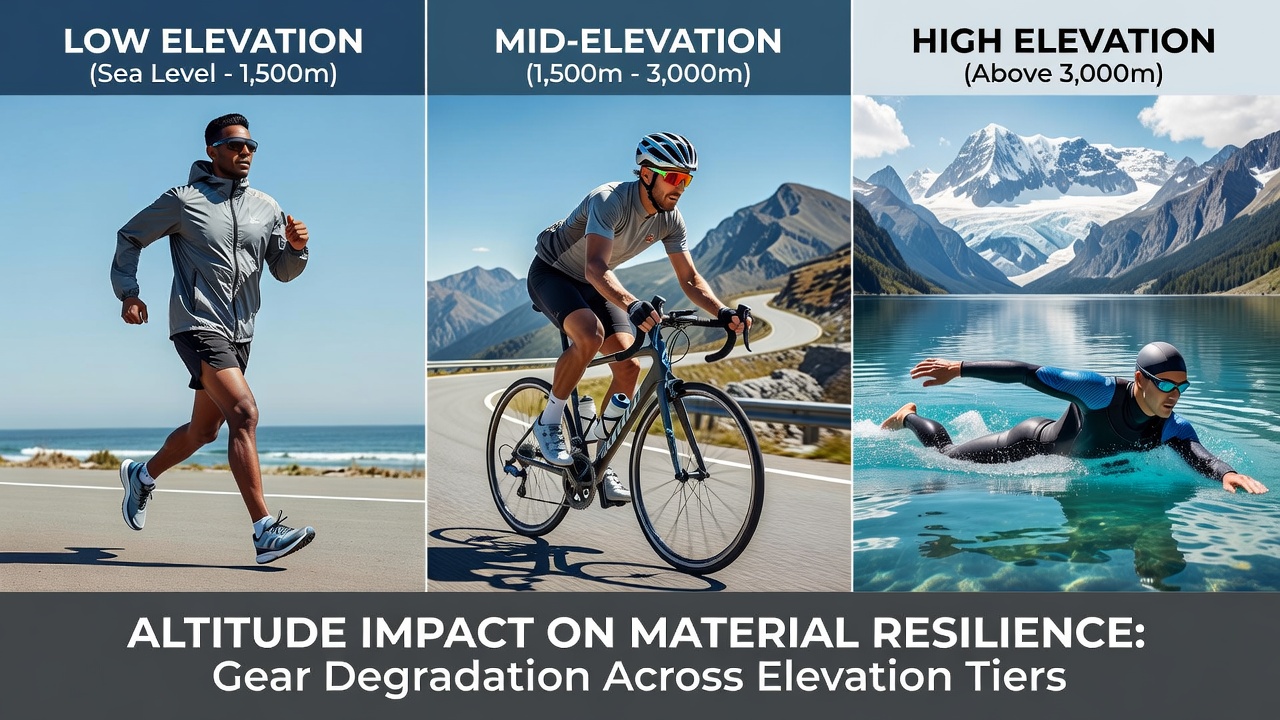
Lower atmospheric pressure and reduced oxygen levels at elevation create measurable shifts in how polymers, foams, and textiles hold up under repeated stress, and athletes who train above 2,000 meters encounter these changes regularly. Research from institutions tracking equipment performance shows that rubber compounds in running shoe midsoles expand slightly while simultaneously losing elasticity faster because gas molecules inside the foam cells behave differently when external pressure drops. Cyclists notice similar patterns in tire casings and frame coatings, where UV exposure combines with temperature swings to accelerate surface cracking on carbon-fiber laminates. Swimmers using lakes or high-altitude pools deal with swimwear fabrics that stretch and recover at altered rates, particularly when neoprene panels encounter both colder water and stronger solar radiation.
Material Behavior Under Reduced Pressure
Observers note that closed-cell foams common in running shoes and cycling saddles contain trapped air that expands when surrounding pressure falls, which can increase midsole volume by up to 4 percent at 3,000 meters according to laboratory simulations conducted by sports engineering groups. This expansion alters cushioning response during foot strike, yet repeated compression cycles cause the same foam to fatigue more quickly once athletes descend and the cells contract again. Textile laminates in jackets and tights experience comparable stress because adhesive layers between fabrics expand and contract at different rates, leading to delamination along seams after several weeks of high-elevation use. Data collected from athletes who rotate between sea-level and mountain training camps indicate that these effects compound when daily temperature swings exceed 15 degrees Celsius.
Impact on Running Footwear and Apparel
Running shoe outsoles made from rubber blends show accelerated abrasion at altitude because lower humidity dries surface compounds faster, while the same reduced humidity makes upper mesh less prone to moisture retention yet more susceptible to UV-induced brittleness. Studies tracking runners preparing for events in the Colorado Rockies found that midsole resilience dropped measurably after 150 kilometers of cumulative high-elevation mileage compared with equivalent distance at lower elevations. Apparel manufacturers have responded by incorporating yarns with higher UV stabilizers, yet long-term field tests reveal that even treated fabrics lose tensile strength when exposed to both intense radiation and repeated stretching across elevation changes. Those who monitor equipment note that lacing systems and eyelets also experience earlier wear because thermal contraction at night tightens components that then loosen during daytime expansion.
Cycling Components and Coatings
Carbon-fiber bicycle frames rely on resin matrices that cure to specific hardness levels, and those matrices can develop micro-fractures when rapid temperature drops occur at altitude while the bike sits overnight. Tire sidewalls, typically butyl or latex, lose internal pressure more rapidly because the pressure differential between the tire and thinner outside air increases leakage through microscopic pores. Groups monitoring professional teams report that sealant fluids inside tubeless setups evaporate or thicken at different rates above 2,500 meters, which changes puncture resistance over multi-day stage races. Drivetrain lubricants face parallel challenges since lower air density allows dust particles to remain suspended longer, increasing abrasive wear on chains and cassettes during climbs that last several hours. In June 2026, engineers presenting at an international cycling symposium shared sensor data confirming that chain elongation rates increased 12 percent faster during high-mountain stages than during equivalent flat-terrain training at sea level.
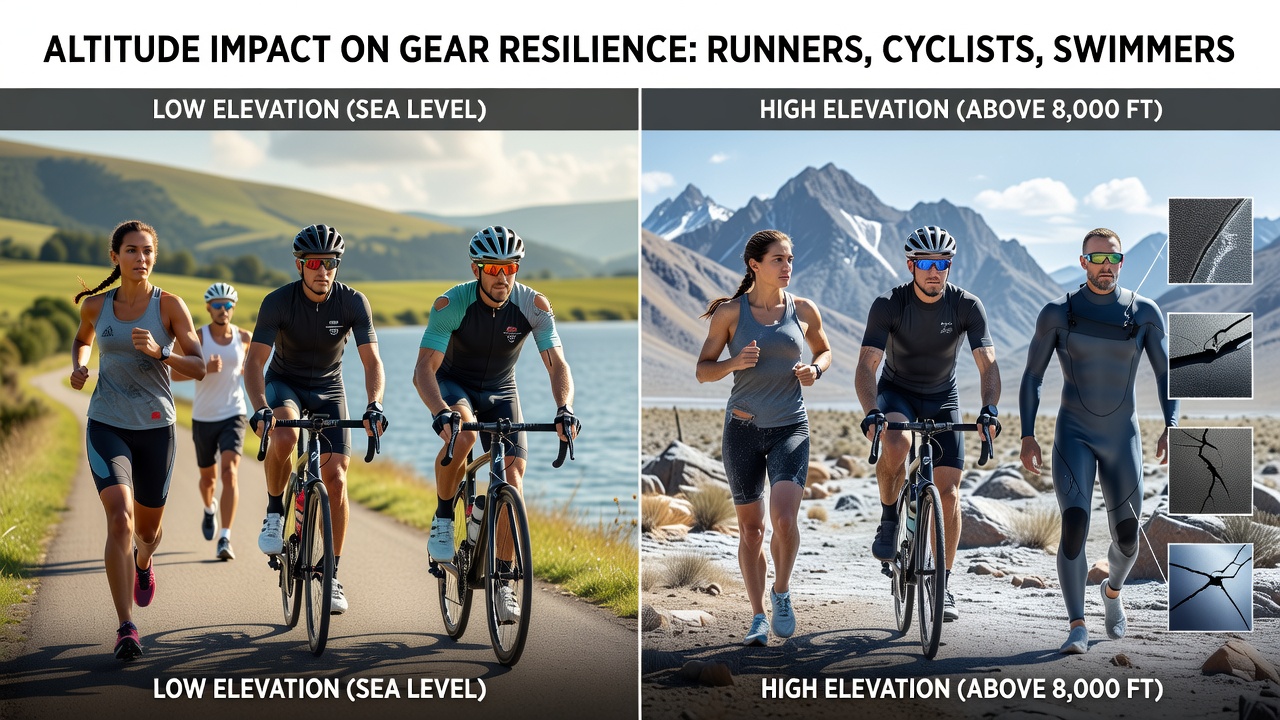
Swimwear and Aquatic Accessories at Elevation
Competitive swimwear constructed from polyester and elastane blends encounters two primary stressors above 2,000 meters: stronger ultraviolet radiation that breaks polymer chains and colder water temperatures that reduce fabric elasticity during each stroke cycle. Goggle seals made from silicone maintain flexibility better than earlier rubber versions, yet frame plastics still contract enough at dawn temperatures to alter fit until the material warms. Researchers from Canadian aquatic centers documented that training at 2,800 meters caused swimsuit fabric to lose 7 percent of its original compression strength after 40 hours of pool time, compared with 3 percent loss during equivalent low-elevation sessions. Chlorine interaction with UV exposure further accelerates fading and fiber weakening, prompting manufacturers to add ceramic particle coatings that reflect a portion of incoming radiation.
Combined Environmental Stressors
Equipment rarely faces isolated altitude effects because lower pressure, colder temperatures, and higher UV radiation act together. Observers tracking multi-sport athletes find that running shoes stored in mountain lodges overnight experience condensation inside foam cells when temperatures rise rapidly after sunrise, which then freezes again the next evening and creates internal micro-damage. Cyclists who travel between valleys and passes encounter rapid humidity shifts that affect brake pad compounds and shift cable housings. Swimmers moving between indoor pools and outdoor high lakes deal with both chemical and solar degradation on the same garment within a single day. Data compiled by environmental monitoring networks shows these combined factors shorten overall equipment lifespan by 15 to 25 percent when athletes maintain year-round schedules above 2,000 meters.
Maintenance Adjustments Observed in Practice
Teams and individual athletes have adopted storage practices that mitigate some effects, such as keeping gear in insulated bags overnight to reduce thermal cycling and applying UV-protective sprays to exposed surfaces before long training blocks. Regular inspection intervals shorten at elevation because early signs of foam compression set or fabric glazing appear after fewer uses. Professional cycling mechanics now carry portable pressure gauges calibrated for altitude, while running coaches recommend rotating multiple pairs of shoes so each spends less cumulative time above certain elevations. Swimmers increasingly select suits with reinforced seam taping after noticing that standard stitching fails first along areas repeatedly stretched during breathing cycles at altitude.
Conclusion
Altitude-induced changes in atmospheric pressure, temperature range, and solar intensity produce documented alterations in how foams, polymers, and textiles perform across running, cycling, and swimming equipment. Field measurements and laboratory simulations consistently show faster fatigue rates in midsoles, frame resins, and compression fabrics when athletes operate above 2,000 meters for extended periods. Those managing equipment respond with adjusted inspection schedules, protective treatments, and rotation protocols that extend usable life despite the harsher conditions. Ongoing data collection from multiple regions continues to refine understanding of these interactions as training at elevation becomes more common across competitive disciplines.