31 May 2026
How Environmental Factors Dictate Storage Protocols for Preserving Integrity Across Fitness Tools, Court Equipment, and Field Apparel
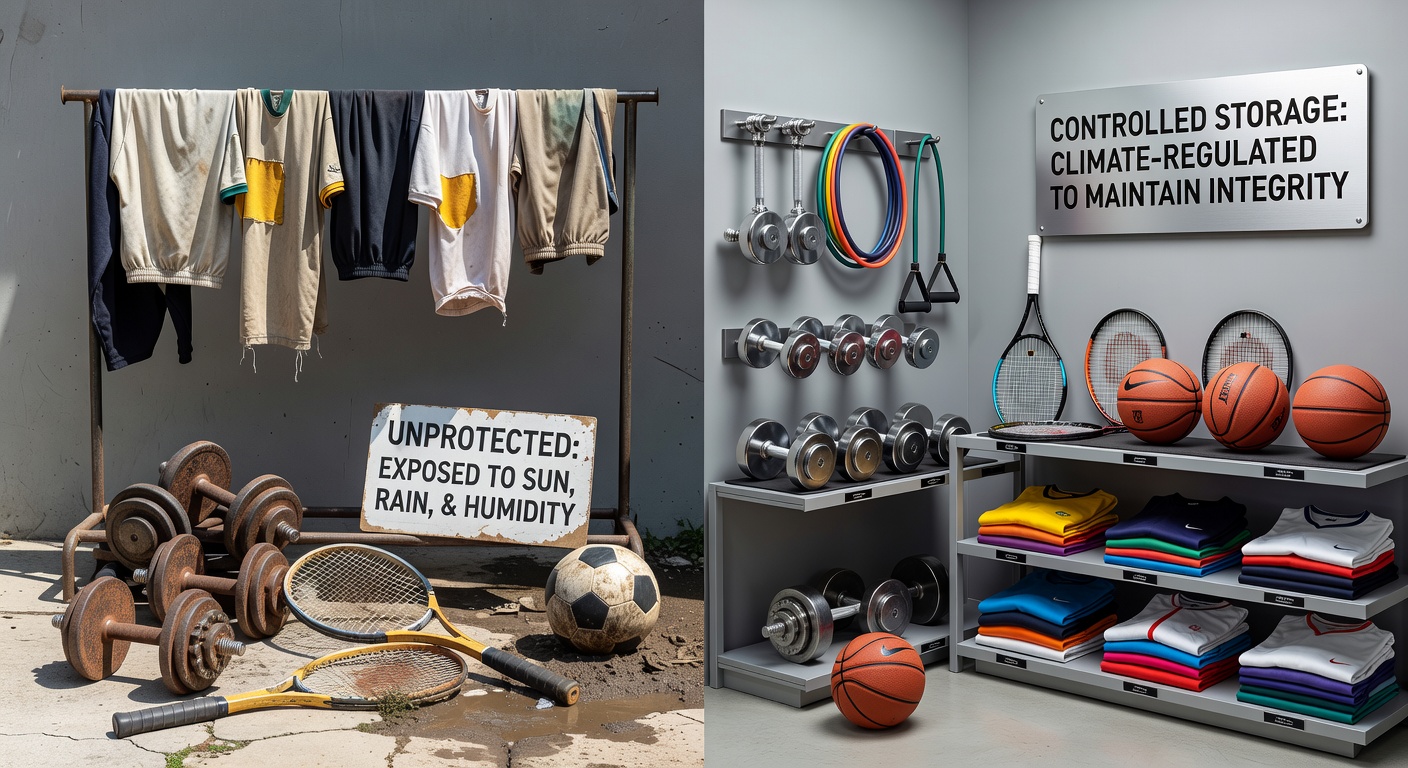
Environmental conditions shape every decision about where and how athletic equipment gets stored because temperature swings, moisture levels, and light exposure directly alter material structures over time. Fitness tools like resistance bands and weight plates respond to heat by softening or warping while court equipment such as tennis rackets and basketballs lose tension or develop surface cracks under similar stress. Field apparel including cleats and jerseys faces accelerated breakdown when humidity promotes mold growth or when UV rays degrade synthetic fibers. Those who manage sports facilities track these variables closely because consistent protocols extend usable life and maintain performance standards across seasons.
Temperature Fluctuations and Material Stability
High temperatures cause polymers in fitness tools to expand and contract repeatedly which weakens internal bonds and leads to premature failure during use. Observers note that storage areas maintained between 15 and 25 degrees Celsius reduce these risks substantially while lower ranges help preserve adhesives in court equipment like racket frames. Field apparel stored near heating sources experiences faster color fading and fabric shrinkage because synthetic blends react to sustained warmth by losing elasticity. Research from institutions monitoring material science shows that daily temperature cycles exceeding 10 degrees Celsius increase degradation rates by measurable margins in rubber and plastic components.
Humidity Control and Moisture Management
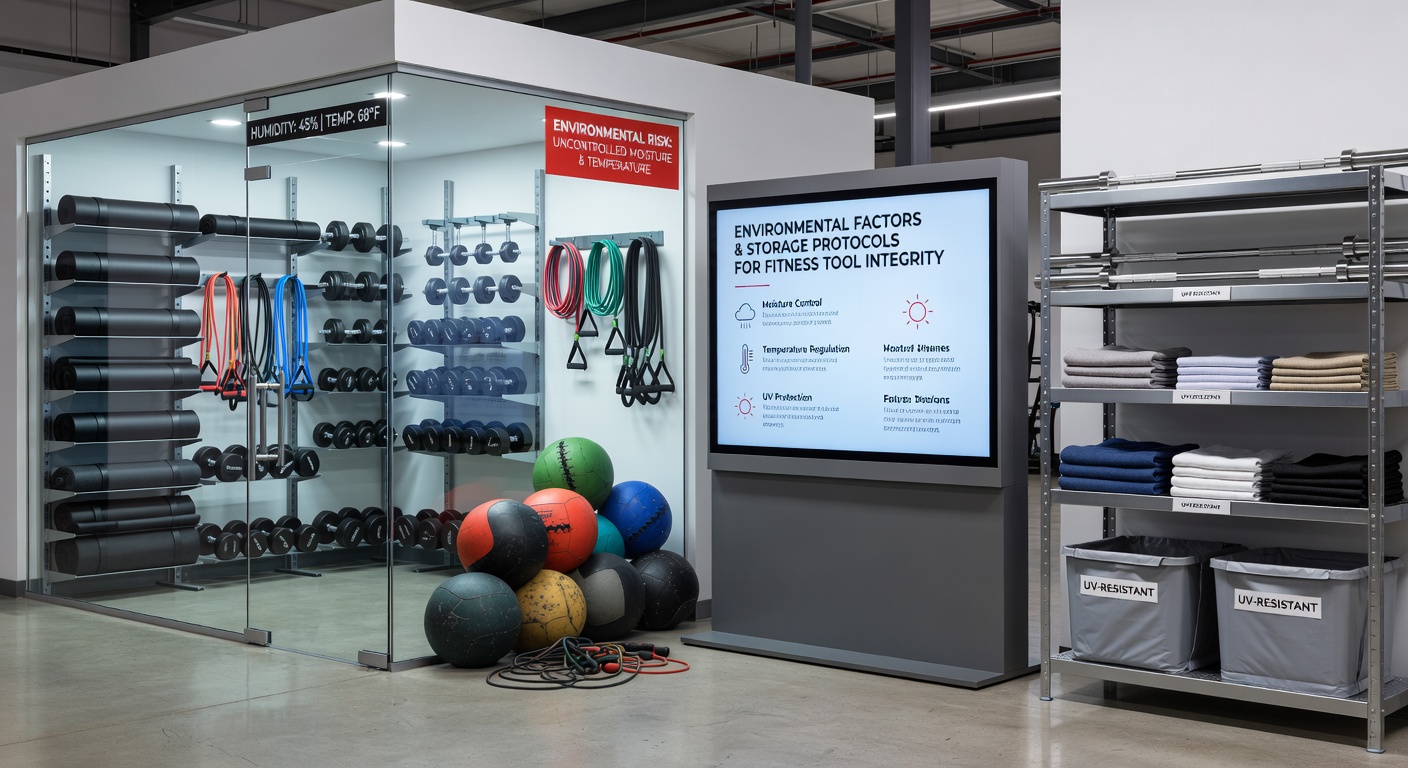
Moisture acts as a catalyst for corrosion in metal fitness tools and promotes bacterial growth on porous court equipment surfaces. Protocols often incorporate dehumidifiers or silica gel packs in enclosed cabinets to keep relative humidity below 50 percent because higher levels encourage rust on dumbbell bars and mold on yoga mats. Field apparel benefits from breathable garment bags that allow air circulation while blocking direct dampness which prevents mildew on uniforms exposed to outdoor conditions. Data collected by environmental monitoring programs indicates that consistent humidity regulation cuts replacement frequency for these items by significant percentages in facilities located in coastal or tropical regions.
Light Exposure and UV Degradation
Ultraviolet radiation breaks down chemical bonds in plastics and fabrics which results in brittleness for fitness tools left near windows and fading for field apparel stored in open areas. Court equipment such as balls and pads develops surface chalking when exposed to direct sunlight for extended periods because protective coatings degrade under prolonged rays. Facilities address this through opaque containers or shaded storage zones that block UV penetration entirely. Studies conducted by research groups tracking outdoor sports gear reveal that items shielded from light maintain structural integrity for longer intervals compared with those stored without barriers.
Dust, Pollutants, and Air Quality Factors
Airborne particles settle on equipment surfaces and create abrasive conditions during handling which scratches court equipment finishes and clogs mechanisms in fitness tools. Storage protocols include sealed bins or filtered ventilation systems because these measures limit particle accumulation in high-traffic facilities. Field apparel stored in dusty environments requires additional protective covers to avoid embedded grit that shortens fabric lifespan during washing cycles. Environmental assessments conducted across multiple regions demonstrate that filtered air systems preserve surface quality more effectively than open shelving arrangements.
Seasonal Adjustments and Regional Protocols
Facilities adapt storage methods according to local climate patterns because winter freezes affect metal expansion in fitness tools while summer rains increase mold risks for field apparel. In May 2026 updated guidelines from international sports equipment organizations emphasized modular storage units that adjust ventilation based on real-time sensor readings for temperature and humidity. Court equipment benefits from these adaptive systems because they prevent condensation buildup during transitional weather periods. Those managing multi-sport venues combine climate data with usage schedules to rotate items between active and protected zones which balances accessibility with preservation needs.
Implementation Practices Across Facilities
Practical application involves labeling storage zones by environmental sensitivity and training staff to verify conditions at regular intervals. Fitness tools often occupy climate-controlled rooms separate from court equipment that tolerates slightly wider ranges. Field apparel hangs in ventilated closets equipped with moisture absorbers because these arrangements reduce contact with floors where dampness collects. Organizations following structured protocols report fewer instances of equipment failure during peak usage times according to maintenance logs shared among regional sports centers.
Conclusion
Storage protocols grounded in environmental monitoring deliver measurable benefits for fitness tools, court equipment, and field apparel by addressing temperature, humidity, light, and air quality variables systematically. Facilities that integrate these factors into daily operations maintain equipment performance standards while reducing long-term replacement costs. Continued refinement of these methods supports consistent availability of reliable gear across diverse athletic settings.