26 Jun 2026
How Manufacturing Precision Standards Are Reshaping Durability Expectations for Gear Used in Team and Individual Athletic Pursuits
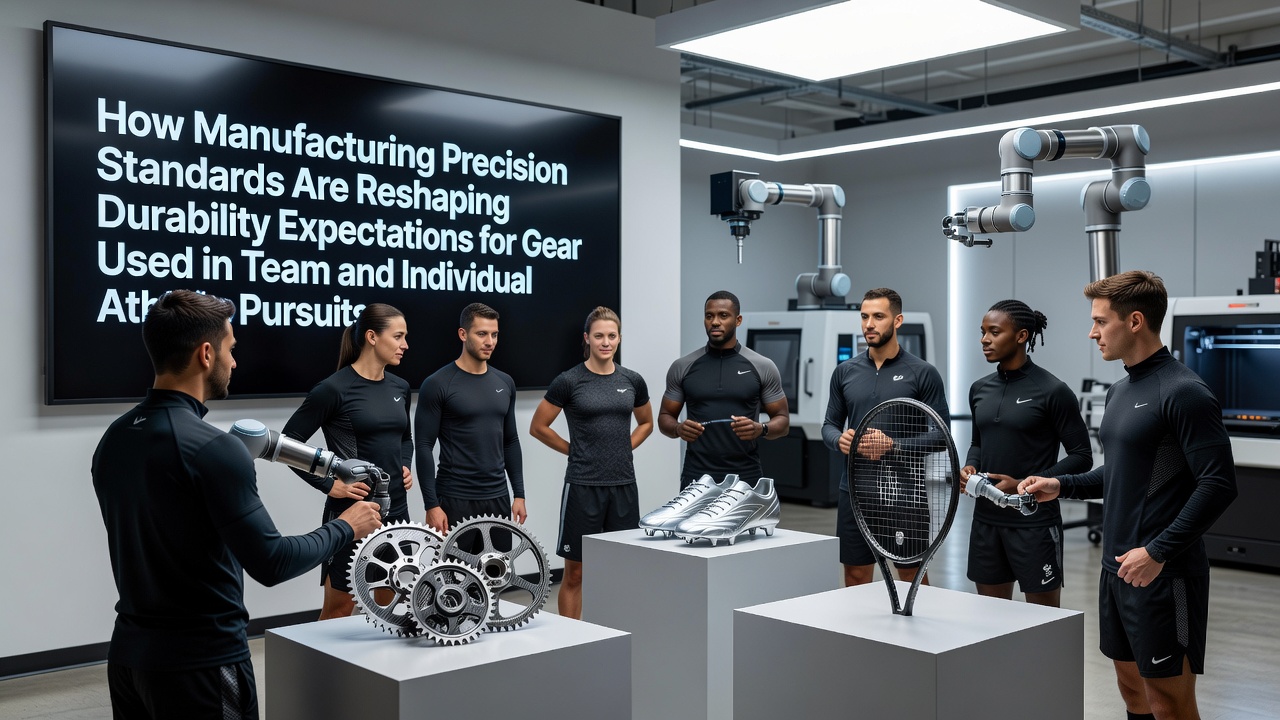
Manufacturing precision standards have tightened across the sports equipment sector in recent years, and data from industry reports show these changes directly influence how long gear lasts under repeated stress in both team competitions and individual training sessions. Researchers at institutions like the University of Stuttgart have documented how tolerances measured in microns now govern everything from seam alignment in soccer balls to frame alignment in tennis rackets, creating measurable gains in resistance to fatigue and environmental wear.
Precision Techniques Driving Material Consistency
Computer numerical control machining combined with laser scanning verification allows producers to maintain dimensional accuracy within 0.05 millimeters on high-impact components, while advanced composite layup processes use automated fiber placement to eliminate voids that previously shortened product life. These methods replace older hand-assembly approaches and produce batches where every unit meets identical stress thresholds, according to testing protocols established by the American Society for Testing and Materials. Observers note that when variance drops this low, athletes experience fewer unexpected failures during extended matches or training blocks.
Standards organizations in the European Union have updated their certification frameworks to require cyclic loading tests that simulate thousands of impacts before approval, and similar requirements appear in Canadian guidelines for protective equipment. The result shows up in field data where average replacement intervals for certain items stretch by 20 to 30 percent compared with equipment made under previous tolerances.
Effects on Team Sports Equipment
In basketball and soccer, precision-molded outer covers now resist abrasion from court surfaces and pitch conditions more effectively because surface textures and seam depths remain uniform across every ball produced. Manufacturers apply these controls to inner bladders as well, reducing air leakage rates that once forced frequent reinflation. Studies conducted by the Sports Engineering Research Group at Loughborough University tracked professional match balls over multiple seasons and recorded consistent pressure retention that correlates with tighter manufacturing specifications.
Protective padding in helmets and shoulder pads benefits similarly when foam densities are controlled to within one percent across production runs, allowing energy absorption to stay predictable even after repeated collisions. Team equipment managers report that inventory turnover slows when items maintain structural integrity through an entire competitive calendar rather than requiring mid-season swaps.
Changes in Individual Athletic Gear
Running shoes and cycling components illustrate parallel shifts, where midsole foams are now extruded with cell structures calibrated by optical sensors during production, resulting in slower compression set over hundreds of kilometers. Frame builders for bicycles use robotic welding stations that hold joint angles to fractions of a degree, cutting the incidence of micro-cracks that develop under prolonged vibration. Data collected by the Australian Institute of Sport indicates that frames produced under these controls demonstrate extended fatigue life in laboratory simulations equivalent to several racing seasons.
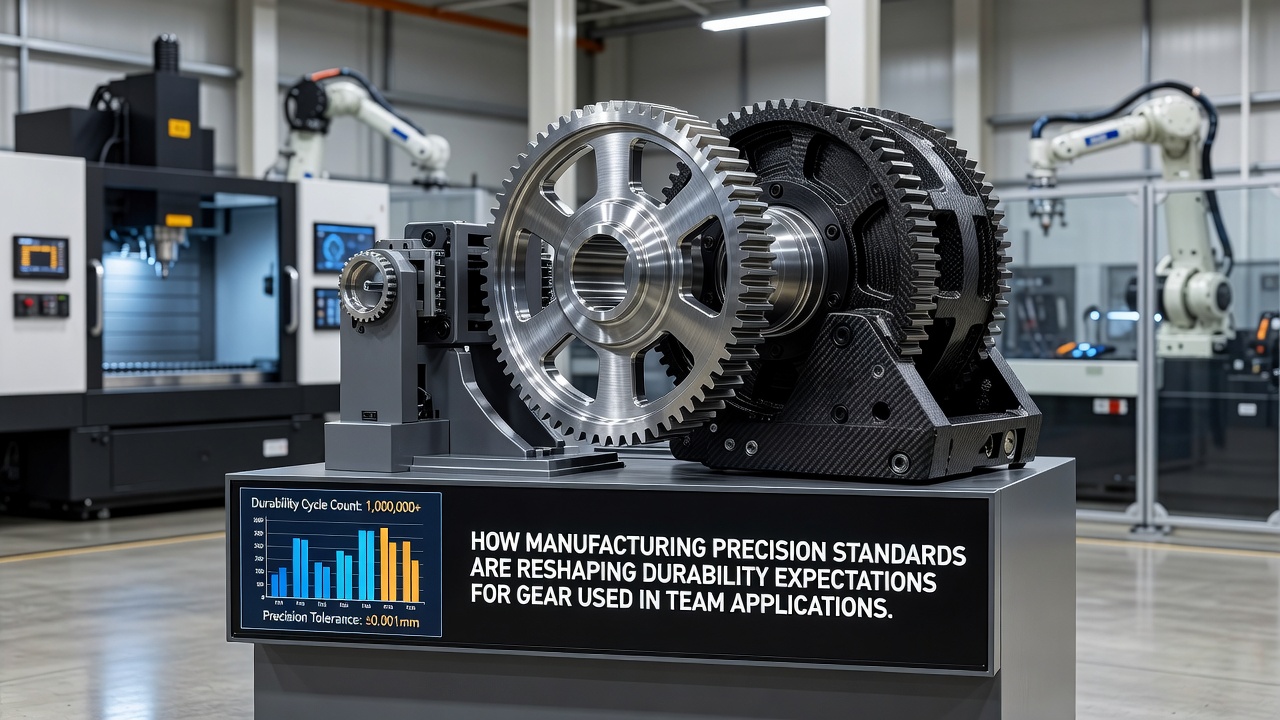
Tennis racket strings and golf club faces receive similar treatment through computer-controlled tensioning and milling operations that keep performance characteristics stable even after thousands of strikes. Players notice that equipment maintains its intended launch angles and spin rates longer into its service life, reducing the frequency of replacements driven by gradual performance drift.
Measurement Standards and Testing Protocols
Updated durability benchmarks now incorporate multi-axis stress rigs and environmental chambers that replicate temperature swings, moisture exposure, and ultraviolet radiation in accelerated sequences. Certification requires equipment to retain at least 90 percent of original performance metrics after these cycles, a threshold that older standards did not enforce uniformly. Government agencies in Japan and South Korea have aligned their import requirements with these protocols, creating global consistency that benefits both large manufacturers and smaller specialty producers.
Traceability systems using embedded microchips or laser-etched identifiers allow end users and maintenance staff to access production batch records, confirming that each item underwent the full suite of precision checks. This documentation supports warranty claims and helps organizations plan replacement schedules based on actual usage data rather than conservative estimates.
Outlook Through Mid-2026
Industry roadmaps indicate further tightening of allowable tolerances in additive manufacturing processes scheduled for rollout by June 2026, particularly for custom-fit components in contact sports. Pilot programs already underway test real-time sensor feedback during production to correct deviations before parts leave the line, which should compound the durability gains already recorded. Those monitoring supply chains expect these advances to appear first in high-volume team equipment before migrating to niche individual sports markets.
Conclusion
Precision manufacturing standards continue to raise baseline durability across athletic gear categories by enforcing tighter control over dimensions, material properties, and assembly consistency. Evidence from laboratory testing and field tracking demonstrates longer service intervals for items used in both team and individual settings, with updated certification frameworks ensuring these improvements reach end users. As production technologies advance through 2026, the same principles of reduced variance are positioned to extend equipment lifespan even further while maintaining performance characteristics under demanding conditions.