26 May 2026
Material Sourcing Shifts Reshaping Production Timelines for Swimwear, Golf Clubs, and Boxing Gloves
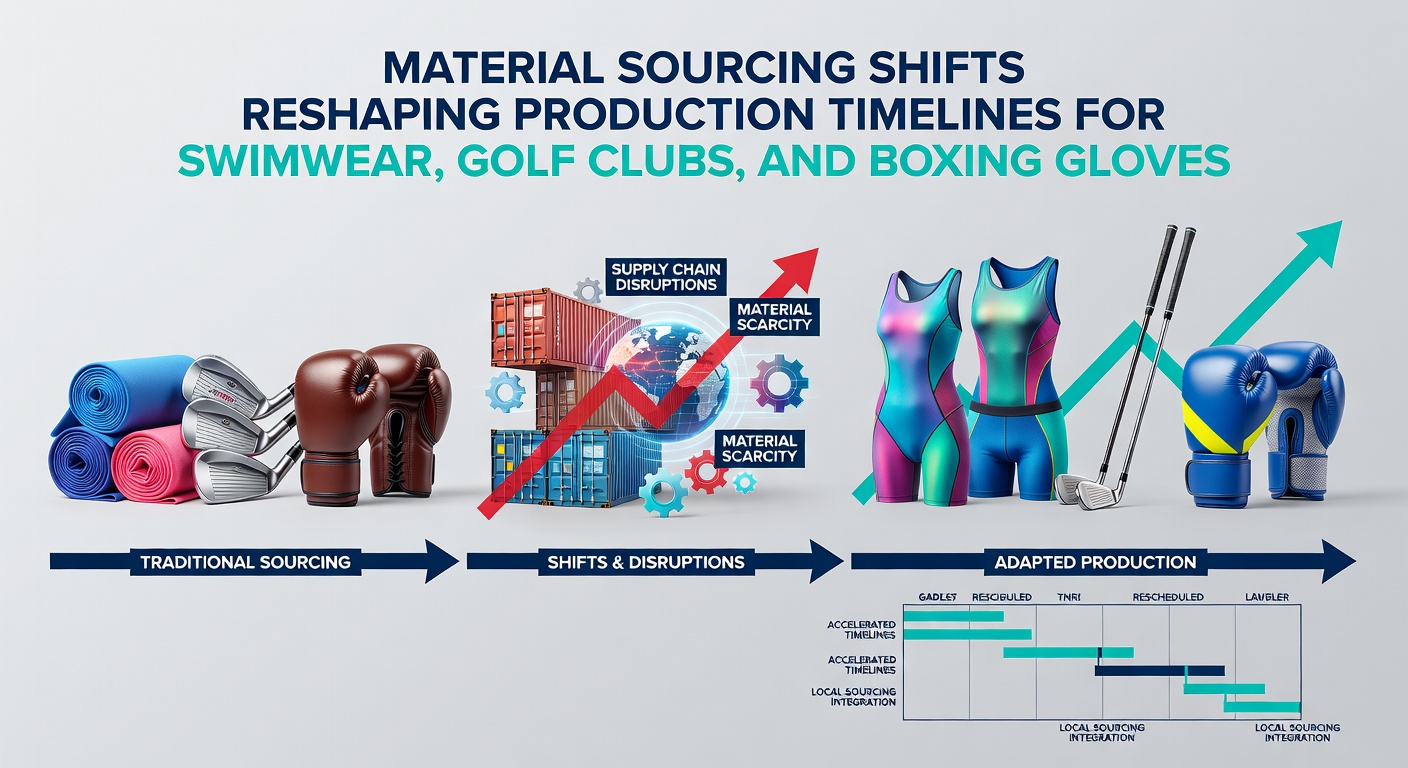
Manufacturers across the swimwear, golf equipment, and combat sports sectors have adjusted their procurement strategies in response to evolving supplier networks and regulatory changes that gained momentum through 2025 into May 2026, and these adjustments have extended lead times for finished goods by varying margins depending on the product category and region of origin. Data from industry tracking services indicate that average production cycles for certain swimwear lines lengthened by three to five weeks during the first half of 2026, while similar patterns emerged for golf club shafts and boxing glove components sourced from alternative regions.
Supply Network Realignments Underway
Companies that previously relied on concentrated sources in Southeast Asia have diversified toward suppliers in South America and Eastern Europe, and this transition stems from both cost fluctuations and new compliance standards introduced under international trade frameworks. Observers note that these moves require additional certification steps for raw inputs such as elastane blends and composite fibers, which adds sequential delays before materials reach assembly lines. Research indicates that firms adopting multi-regional sourcing reported initial setup periods of four to seven months before stable delivery volumes resumed.
Effects on Swimwear Manufacturing Cycles
Swimwear producers have shifted toward recycled polymer inputs derived from ocean-sourced waste streams, and facilities that integrated these materials encountered extended qualification periods for fabric consistency and dye affinity. Production schedules that once allowed seasonal collections to reach retailers within 90 days now stretch closer to 120 days when new material batches undergo testing protocols, according to reports compiled by European textile associations. One study revealed that manufacturers in Portugal and Spain experienced the most pronounced adjustments because they integrated Latin American feedstock suppliers starting in late 2025.
Golf Club Component Lead Times
Golf club makers have incorporated carbon fiber alternatives sourced from suppliers in Australia and Canada, and these materials demand specialized curing processes that differ from traditional Asian-sourced resins. Assembly plants reported that shaft production runs scheduled for March through May 2026 slipped by an average of 18 days as quality verification procedures lengthened, based on data shared by equipment trade groups. The ball's in their court for companies that must now coordinate between distant material certifiers and domestic finishing operations, creating bottlenecks at the interface between raw stock arrival and final machining.

Boxing Glove Material Transitions
Boxing glove manufacturers have explored synthetic leather substitutes and ethically sourced hides from African and South American tanneries, and these inputs require additional traceability documentation under updated import guidelines that took effect in several markets during spring 2026. Facilities in Mexico and Thailand documented padding and shell production delays averaging 22 days when switching to verified supply chains, with researchers at academic institutions noting that glove weight tolerances demanded extra calibration steps after material changes. What's interesting is how these adjustments ripple through training equipment distributors who rely on consistent restocking intervals.
Combined Timeline Pressures Across Categories
Across all three product types, inventory buffers have expanded to compensate for unpredictable arrival windows, and logistics analyses show that warehousing costs rose between 12 and 19 percent in the first quarter of 2026 for companies maintaining North American and European distribution centers. Experts have observed that smaller brands without vertical integration faced steeper challenges because they lacked leverage to secure priority slots with newer material providers. Those who've studied this know that the cumulative effect includes revised retail launch calendars and occasional product substitutions on shelves during peak demand periods.
Regulatory and Certification Influences
Updated environmental reporting requirements from bodies such as the European Commission and the Australian Department of Industry, Science and Resources have prompted documentation layers that precede material acceptance, and compliance verification now occurs at multiple checkpoints along the supply route. Figures reveal that certification turnaround times averaged 25 days for new feedstock batches in early 2026, compared with shorter windows under previous sourcing models. Industry organizations tracking these metrics emphasize that the added oversight aims to standardize sustainability claims while simultaneously extending front-end planning horizons for production teams.
Outlook for Stabilization
Analysts project that procurement networks will achieve greater equilibrium by late 2027 once supplier relationships mature and testing protocols become routine, yet interim periods continue to require careful coordination between design teams and logistics partners. Data compiled through May 2026 show gradual reductions in delay magnitudes for early adopters of diversified sourcing, suggesting that initial disruptions may ease as familiarity with new material characteristics increases. Observers note continued monitoring of trade policy developments that could either accelerate or further complicate these transitions.
Conclusion
Material sourcing adjustments continue to influence production schedules for swimwear, golf clubs, and boxing gloves, with measurable extensions in lead times documented through mid-2026. Manufacturers that navigated the shift toward diversified suppliers and verified inputs have established frameworks that may support more predictable timelines once certification processes standardize, and ongoing data collection from trade and regulatory sources will track whether these patterns stabilize or evolve under future policy conditions.