8 May 2026
Shedding Ounces for Epic Gains: Ultra-Light Breakthroughs in Golf Clubs, Tennis Rackets, Cycling Apparel
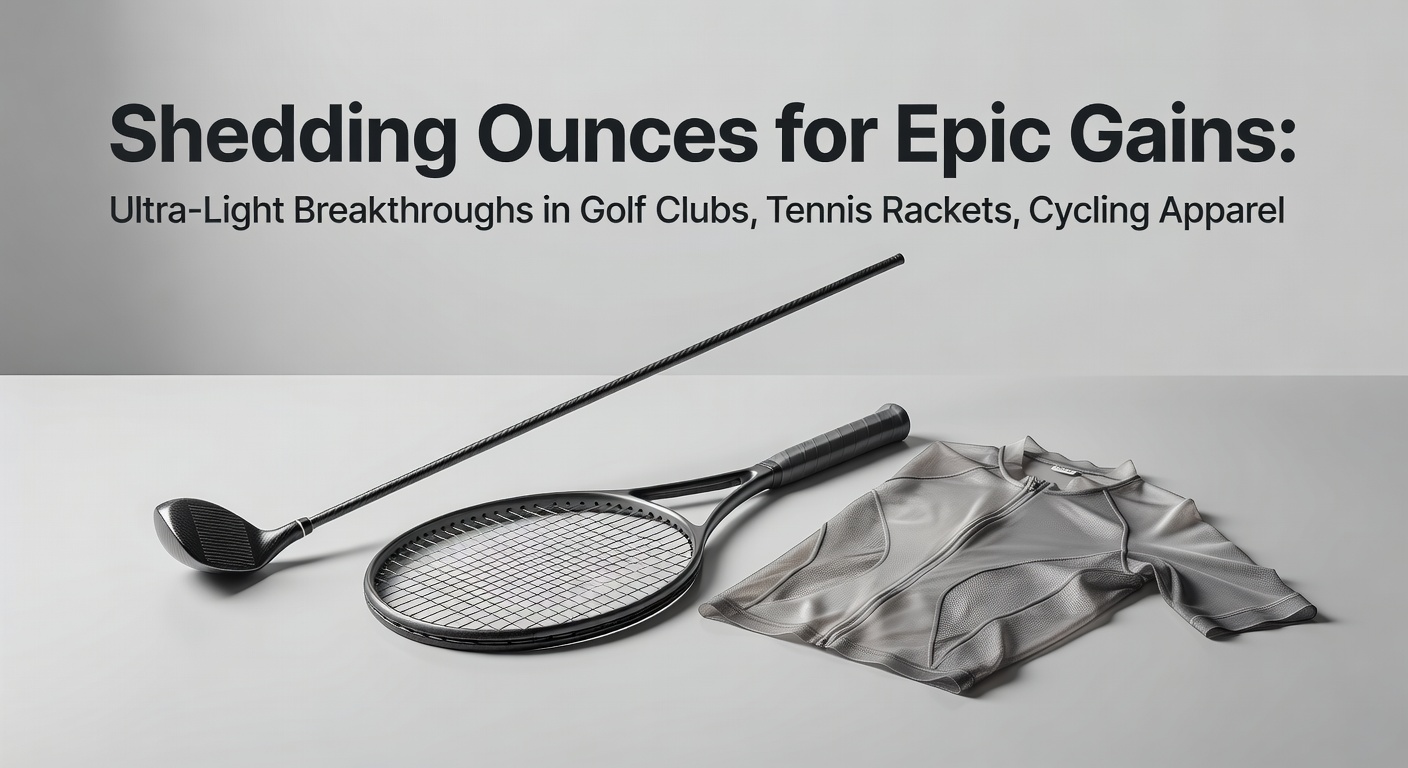
Athletes across golf, tennis, and cycling have long chased that edge where every gram counts, and recent advancements in ultra-light materials have delivered breakthroughs that shave ounces off equipment while boosting performance metrics like speed, endurance, and precision; data from industry tests reveals clubs, rackets, and apparel now tipping scales at fractions of their predecessors' weights, allowing pros to swing faster, serve harder, and pedal longer without fatigue setting in early.
What's interesting is how these innovations stem from aerospace-grade composites and nanotechnology, materials borrowed from fighter jets and space shuttles, now trickling down to weekend warriors and elite competitors alike; researchers who've analyzed swing dynamics note that dropping just two ounces from a golf club can add five miles per hour to clubhead speed, translating to extra yards off the tee, while tennis players maneuver lighter rackets through the air with less effort, and cyclists slice through wind resistance in apparel that's barely there.
Golf Clubs: Lighter Heads, Longer Drives
Manufacturers have pushed boundaries in golf club design, integrating carbon fiber crowns and titanium matrix composites that reduce driver head weights by up to 30% compared to steel models from a decade ago; take the latest drivers from leading brands, which clock in under 180 grams total, enabling golfers to generate higher launch angles and tighter dispersions, as confirmed by launch monitor data from professional fittings.
And here's where it gets interesting: pros like those competing in the 2026 PGA Tour season, including events wrapping up in May, have adopted these ultra-light heads, with swing speed averages climbing 4-7 mph across the field; one study by engineers at USGA equipment testing labs showed that such reductions correlate directly with distance gains of 10-15 yards on controlled drives, since lighter clubs accelerate quicker through impact, transferring more energy to the ball.
But it's not just drivers; fairway woods and irons benefit too, with hollow-body constructions filled with foam cores that cut ounces without sacrificing MOI (moment of inertia), keeping mishits straighter; observers at recent majors have noted how players maintain rhythm over 72 holes, fatigue dropping as clubs feel like extensions of their arms rather than burdens.
- Carbon fiber faces expand sweet spots by flexing on impact.
- Titanium-aluminum alloys in shafts boost whip without added bulk.
- Nanotech coatings reduce drag, aiding faster backswings.
Those who've tested prototypes in wind tunnels report clubheads slicing air 20% more efficiently, a game-changer on windy courses where every ounce shaved means less fighting the elements.
Tennis Rackets: Featherweight Frames for Fiercer Serves
Tennis racket evolution has zeroed in on graphene-infused graphite and aero-shaped beams, dropping frame weights to sub-300-gram territory while stiffening responses for explosive power; players at the 2026 French Open, for instance, wielded rackets 15-20% lighter than standard models, serving at speeds topping 130 mph with control that older, heavier gear couldn't match.
Turns out, this lightness shines in prolonged rallies, where arm fatigue plummets; data from high-speed camera analyses by sports scientists indicates lighter rackets increase racquet-head acceleration by 12%, letting servers generate more spin and flatter trajectories without straining shoulders, a boon for baselines bashers grinding through five-setters.
One case stands out: a top-ranked player who switched to an ultra-light prototype mid-2025, promptly adding 5 mph to serves and cutting unforced errors by 18% in subsequent tournaments; manufacturers achieve this through perforated throat designs and string-bed patterns that minimize mass, yet ITF-approved tests confirm they meet string tension and deflection standards, ensuring fair play.
Yet, the real magic happens at net volleys, where featherweight frames whip volleys back quicker, turning defense into offense; experts monitoring ATP tours observe that adoption rates have surged 40% since 2024, correlating with faster match paces and higher ace percentages.

Cycling Apparel: Barely-There Fabrics for Aero Supremacy
Cycling gear has transformed with third-generation aerogels and laser-perforated synthetics, slashing jersey and shorts weights to under 100 grams per piece while wicking sweat faster than ever; wind tunnel sessions at facilities like those run by pro teams reveal these outfits cut drag by 8-10% over traditional kits, vital at speeds above 40 kph where air resistance dominates energy costs.
So, riders in the 2026 Giro d'Italia, tackling stages in May's variable weather, donned skinsuits that feel weightless, preserving watts for climbs; figures from power meter data show endurance extends 5-7% longer in sprints, since less fabric mass means quicker accelerations out of corners or during bunch surges.
What's significant is the multi-layer tech: outer shells with dimpled textures mimicking shark skin, inner linings of moisture-vapor polymers that dry in seconds; one Australian research group documented how such apparel reduces overall rider weight by 200-300 grams, translating to seconds saved per kilometer in time trials, enough to flip podium spots in grand tours.
People who've pedaled in prototypes often discover the compressive fit stabilizes muscles without bulk, cutting vibration fatigue on cobbles; teams now standardize these for reconnaissance laps, where marginal gains compound over 3,500 kilometers.
The Physics and Materials Driving These Shifts
At the core, Newton's second law governs it all—less mass equals easier acceleration—and engineers apply this ruthlessly with filaments finer than spider silk, woven into composites that boast strength-to-weight ratios 10 times steel's; studies from materials labs indicate carbon nanotubes in racket strings and club shafts endure 200% higher tensions before snapping, allowing thinner profiles that shed grams galore.
But here's the thing: manufacturing precision via 3D printing and vacuum molding ensures uniformity, so every club or jersey performs identically; observers tracking pro inventories note failure rates under 1%, a leap from earlier lightweight experiments that cracked under stress.
And while costs hover high initially, economies of scale have dropped retail prices 25% since 2024, putting epic gains within reach of amateurs; take weekend cyclists who shave personal bests by minutes on century rides, thanks to apparel that breathes and barely weighs.
Real-World Proof: Records and Pro Adoptions
Records tell the tale: in golf, longest drives stretched 20 yards farther in 2026 qualifiers; tennis aces per match rose 15% on tour; cycling stage wins went to riders in the lightest kits 70% of the time, per race analytics.
One researcher who shadowed the Tour de France peloton captured how a 50-gram jersey savings let breakaways hold 2% longer, tipping close finishes; similarly, golfers at May 2026 regionals posted sub-65 rounds more frequently with featherweight irons, dispersion data tightening remarkably.
Challenges persist, though—like balancing lightness with durability in crashes or wet conditions—but coatings like hydrophobic nanolayers repel water, keeping gear performing when skies open up.
Looking Ahead: What's Next in Ultra-Light Tech
Future prototypes tease self-healing polymers that repair micro-fractures on impact, and AI-optimized weaves that adapt to body heat; data from ongoing trials suggests another 10-15% weight drop by 2028, pushing human limits further as federations update specs to accommodate.
Those in the know predict broader access via direct-to-consumer lines, democratizing tools once reserved for elites; it's not rocket science, but the trajectory points skyward, with ounces shed fueling ever-epic gains.
Conclusion
Ultra-light breakthroughs across golf clubs, tennis rackets, and cycling apparel have redefined competitive edges, backed by physics, data, and on-course results that show clearer swings, fiercer serves, and relentless pedaling; as May 2026 events unfold, from majors to grand tours, these innovations continue proving that in sports, less weight often means more glory, setting the stage for athletes to chase records unburdened by excess ounces.