21 Jul 2026
Supply Chain Adaptations Highlighting Shifts in Global Demand for Golf Clubs and Swimwear
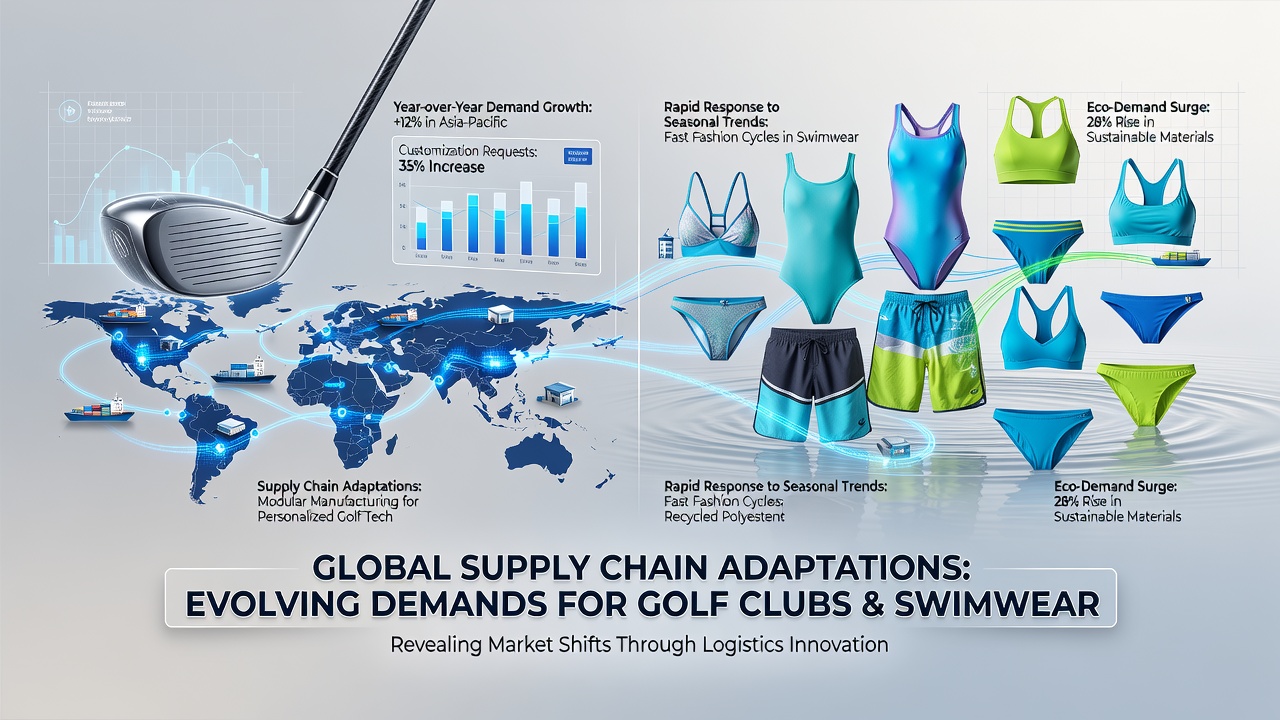
Supply chain adjustments in the sports equipment sector continue to expose patterns in consumer preferences across different regions, particularly for golf clubs and swimwear. Manufacturers have rerouted material sourcing and production schedules in response to fluctuating import volumes and regional sales data through mid-2026. These changes trace back to shifts in where and how products move from factories to end markets.
Material Sourcing Adjustments for Golf Clubs
Production facilities in Asia have increased orders for graphite shafts and titanium heads while scaling back on steel components, according to trade flow records compiled through 2025. This adjustment aligns with expanded club fitting programs in North American and European markets where custom specifications now account for larger shares of total shipments. Facilities in Vietnam and South Korea report longer lead times on lightweight alloys because demand from emerging golf markets in Southeast Asia has risen steadily since 2023.
Component suppliers have also modified inventory buffers after observing repeated delays at major ports during peak shipping seasons. These buffers allow quicker responses to orders from Australia and the Middle East, where golf participation rates have grown without corresponding increases in local manufacturing capacity. Data from the US International Trade Administration shows that finished club imports from these adjusted routes grew by double digits in the first half of 2026 compared with prior periods.
Fabric and Production Changes in Swimwear
Swimwear producers have redirected orders for elastane and recycled nylon toward suppliers in Turkey and Portugal rather than relying solely on traditional East Asian sources. This rerouting supports shorter delivery windows for European retailers preparing for summer collections and reflects higher volumes moving through Mediterranean ports. Production calendars now incorporate earlier cut-off dates for color and print approvals to accommodate these compressed timelines.
Distribution networks have expanded cold-chain options for certain performance fabrics that require controlled environments during transit. Records from Canadian import statistics indicate that shipments of technical swimwear into North American markets increased notably in the first quarter of 2026, coinciding with expanded training facility construction in several provinces. Manufacturers track these movements through updated digital tracking systems that flag when demand spikes in specific climate zones.
Regional Demand Patterns Emerging from Logistics Data
Logistics providers report that golf club containers bound for Latin American destinations have seen more frequent consolidation at US hubs, while swimwear shipments to the same region often originate directly from European ports. This divergence points to separate demand drivers: golf equipment tied to tourism development and swimwear linked to local competitive swimming programs. Observers tracking container manifests note that July 2026 booking volumes already exceed those recorded in the same month of the previous year for both categories.

Retail replenishment cycles have shortened in several markets, prompting factories to maintain smaller batch sizes that can be adjusted mid-season. European trade statistics from the European Commission reveal that swimwear re-exports through distribution centers in the Netherlands grew as retailers responded to early heat waves in Northern Europe. Similar patterns appear in golf club restocking data from Japanese wholesalers serving domestic resort courses.
Inventory Management and Forecasting Shifts
Companies managing both product lines have adopted shared forecasting platforms that combine weather pattern analysis with participation surveys. These platforms helped identify earlier order placements for swimwear in Australia ahead of the 2026 southern hemisphere summer and steadier but smaller golf club orders in the United States. The combined data sets allow planners to anticipate when certain SKUs will move from overstock to backorder status.
Third-party auditors have documented fewer stockouts at major distribution centers after these platforms came online. The reduction correlates with the decision to hold buffer stock of high-turnover club heads and swimwear sizes rather than finished sets. Such practices emerged after repeated mismatches between forecasted and actual regional sales during 2024 and 2025.
Conclusion
Supply chain records for golf clubs and swimwear continue to serve as indicators of where consumer interest is expanding or contracting across global markets. Adjustments in sourcing locations, production timing, and inventory placement reflect measurable differences in regional demand that logistics data capture more precisely than retail surveys alone. Continued monitoring of these flows will show whether current patterns hold or give way to new routing priorities later in 2026.