7 Jun 2026
The Evolution of Grip Ergonomics Influencing Athlete Hand Health in Racquet and Ball Sports
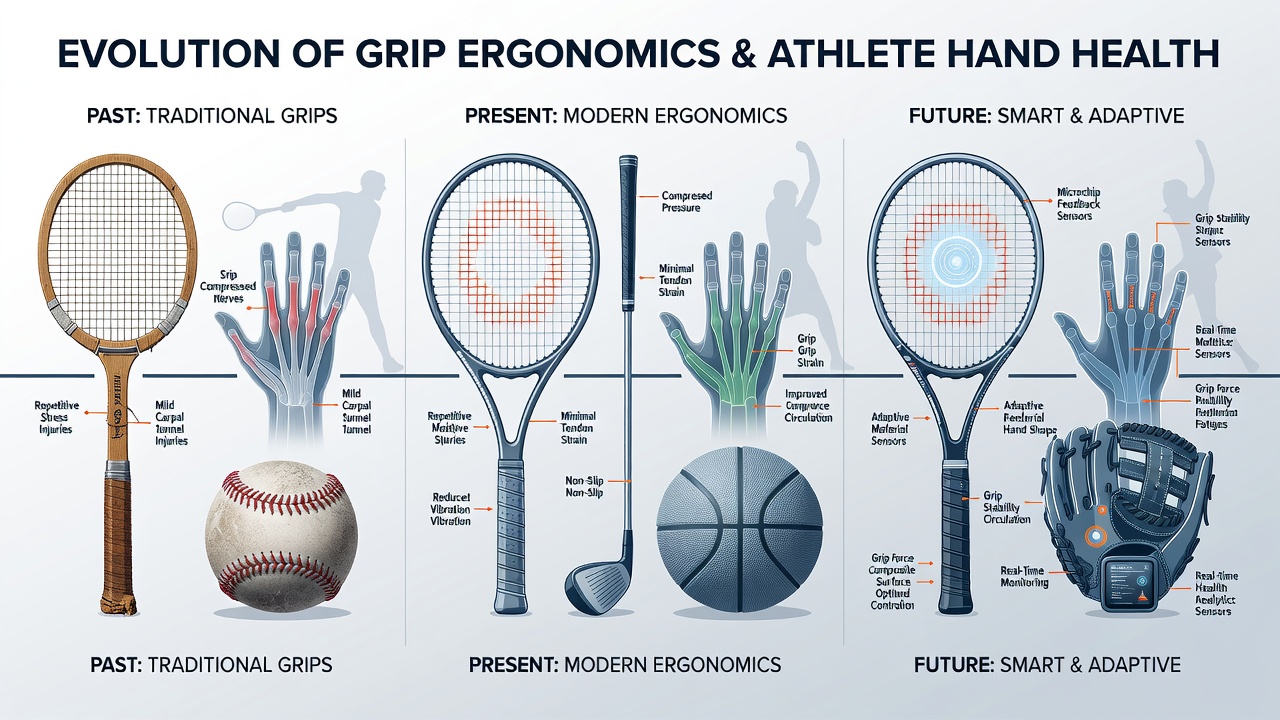
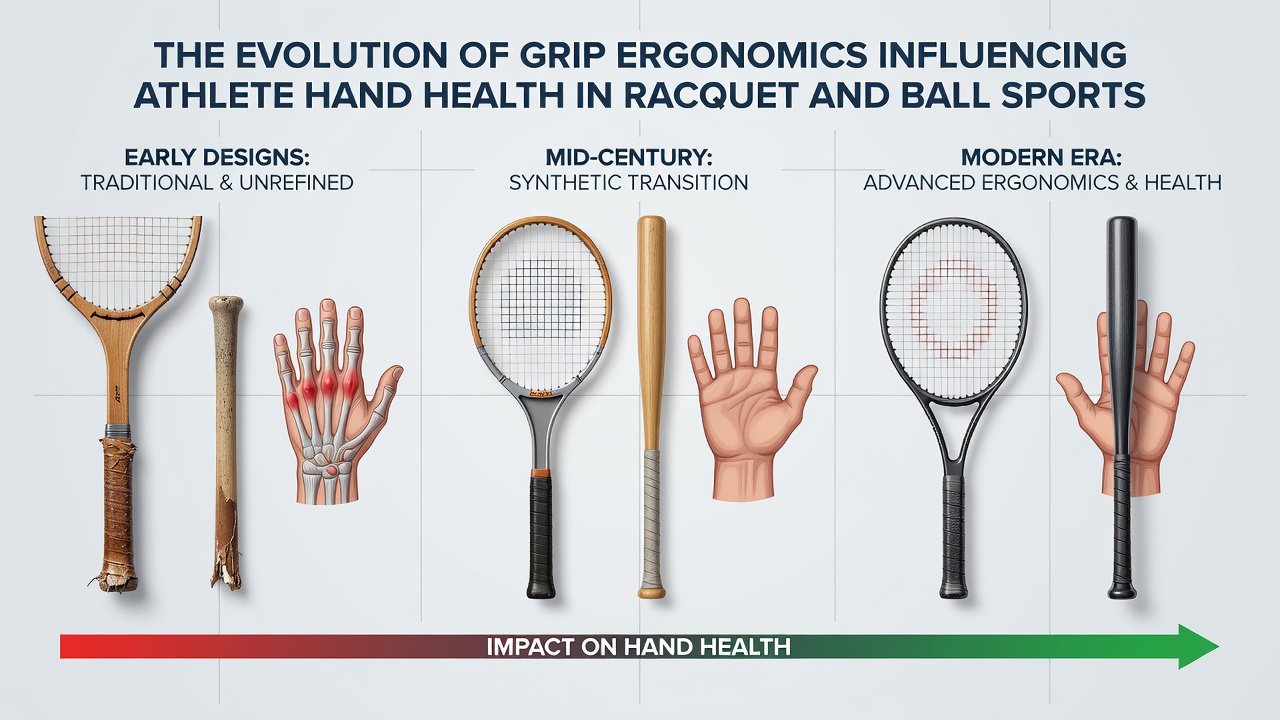
Researchers tracking equipment changes across decades have documented steady shifts in how grips are shaped and constructed for sports like tennis, squash, baseball, and cricket. Early wooden handles wrapped in basic leather gave way to contoured forms that distribute pressure more evenly across the palm and fingers, and data from injury tracking programs show corresponding drops in certain overuse conditions when athletes adopt updated designs.
Studies compiled by the National Institutes of Health indicate that repetitive friction and uneven load distribution on the hand remain leading contributors to issues such as blisters, nerve compression, and tendon strain in these activities. Equipment modifications introduced since the 1990s have focused on increasing surface area contact while reducing peak pressure points, and longitudinal records from professional leagues reveal measurable declines in hand-related time-loss injuries during that period.
Shifts in Materials and Shape Over Time
Leather and cloth wraps dominated through the mid-twentieth century, yet they absorbed moisture quickly and created slippage under sustained use. Manufacturers responded by introducing synthetic rubber compounds and textured polymers in the 1980s, which maintained tackiness across temperature ranges. Biomechanical analyses conducted at multiple universities demonstrate that these surfaces lowered the torque required to maintain racket or bat control, thereby decreasing muscle fatigue in the forearm and wrist extensors.
By the early 2000s, computer-assisted design allowed grips to incorporate variable diameters along the length of the handle. Thicker sections under the heel of the palm and tapered zones near the fingertips align with natural hand anatomy, and field measurements collected during match play confirm reduced peak forces transmitted through the metacarpal bones. Professional organizations in Europe and North America began publishing standardized sizing charts that account for hand breadth and finger length, helping athletes select equipment that matches individual proportions rather than relying on one-size options.
Impact on Specific Hand Health Metrics
Medical databases from sports medicine clinics document that players using early-generation grips experienced higher rates of callus formation and skin breakdown on the thenar eminence. Newer ergonomic models spread contact forces across a broader area, and follow-up examinations show lower incidence of these surface injuries after athletes switched designs. Nerve conduction studies further reveal that vibration damping built into contemporary grips reduces transmission to the median and ulnar nerves, which correlates with fewer reports of numbness during extended sessions.
Baseball and cricket bat manufacturers adopted similar principles, adding tapered knobs and cushioned end caps that limit axial sliding. Data aggregated by the Australian Institute of Sport indicate that these features coincide with decreased rates of handle-related contusions and fractures among batters who log high swing volumes. Racquet sports have seen parallel patterns, with squash and badminton players reporting shorter recovery intervals between tournaments when using updated handle geometry.
Integration of Data and Customization
Pressure-mapping technology introduced in training facilities allows coaches to visualize force distribution in real time, and several professional teams now adjust grip wraps based on individual player scans. A 2025 report from the International Society of Biomechanics in Sports notes that customized builds can lower peak palmar pressure by up to 18 percent compared with stock configurations. These adjustments occur without altering swing mechanics, which preserves performance while addressing hand loading patterns identified during testing.
June 2026 marks the scheduled release of updated equipment certification guidelines from the International Tennis Federation that incorporate hand-health metrics alongside traditional performance standards. Laboratories in multiple countries are already validating prototypes that combine moisture-wicking outer layers with internal cores engineered to absorb high-frequency vibrations, and early results suggest further reductions in cumulative strain for athletes competing at elite levels.
Broader Patterns Across Racquet and Ball Disciplines
Commonalities emerge when comparing grip evolution across disciplines. Both tennis rackets and baseball bats have moved toward modular systems that let athletes swap grip sleeves seasonally or between surfaces. This flexibility accommodates changes in humidity and court or field conditions that previously accelerated skin wear. Observers at major tournaments note that players increasingly carry multiple grip options and rotate them based on match duration and environmental factors.
Youth development programs have also adopted these findings. Schools and academies now introduce equipment scaled to smaller hand sizes earlier, and registry data from national sports bodies show declining rates of hand complaints among junior competitors who begin with properly fitted grips. Adult recreational players benefit from the same sizing advancements, since retail availability of intermediate diameters has expanded in recent years.
Conclusion
Equipment records, injury surveillance systems, and biomechanical testing together illustrate a clear trajectory in grip design that aligns with measurable improvements in athlete hand health across racquet and ball sports. Continued refinement through material science and individualized fitting protocols supports sustained participation while addressing the physical demands of repetitive gripping actions.